
Dental Crowns in Surrey, BC
A dental crown (also called a cap) is a custom-made covering that fits over a damaged or weakened tooth to restore its strength, shape and appearance. At The Dental Group at Central City, our dentists examine your tooth first to decide whether it needs a crown or whether a simpler treatment, such as a filling, will do. We’re inside Central City Shopping Centre in Surrey, BC, and welcome new patients.
Quick facts
| What a crown treats | Large cavities, cracked or fractured teeth, large old fillings, heavily worn teeth, and some teeth after root canal treatment |
| Materials offered | Porcelain / tooth-colored crowns. |
| How it’s made | From an impression or digital record of your prepared tooth. |
| Visits | |
| Cost | estimate given after your exam |
| Hours | Mon–Tue 9 AM–5 PM · Wed–Thu 9 AM–8 PM · Fri 9 AM–6 PM · Sat 9 AM–5 PM · Sun 11 AM–4 PM |
| Location | Unit 1117, 10153 King George Blvd., Surrey, BC V3T 2W1, inside Central City Shopping Centre, next to the Passport Office |
| Phone | (604) 585-2345 |
Book a new patient exam · Call (604) 585-2345
When might you need a crown?
Not every damaged tooth needs one. Your dentist looks at how much healthy tooth remains. A crown may be recommended for:
- A large cavity where there isn’t enough healthy tooth left for a reliable filling (smaller cavities can often be treated with a filling)
- A cracked or fractured tooth. Some can be protected with a crown, but not every cracked tooth can be saved
- A very large existing filling that leaves little natural tooth
- Heavy wear from grinding, clenching or acid erosion
- A tooth after root canal treatment, depending on how much tooth remains and where it is. Not every root canal tooth needs a crown
- A badly shaped or discolored tooth, when a crown is the best option for it
Crown or filling?
| Filling | Crown | |
|---|---|---|
| Covers | Part of the tooth | Most of the visible tooth |
| Typically used for | Smaller cavities or small areas of damage | Teeth that are significantly weakened or damaged |
| Decided by | How much healthy tooth remains, not just the size of the cavity |
Crown, veneer, bridge or implant?
| Option | What it is | Used when |
|---|---|---|
| Crown | Covers a whole tooth | The tooth is still there and can be restored |
| Porcelain veneer | Thin shell on the front of a tooth | Mainly cosmetic changes to otherwise healthy teeth |
| Dental bridge | Replaces one or more missing teeth using neighbouring teeth or implants | A tooth is missing |
| Dental implant | Replaces a missing tooth root, usually topped with a crown | A tooth is missing or can’t be saved |
If a tooth is too damaged to be restored predictably, your dentist may talk with you about extraction and replacement options, including dentures.
Crown materials
The best material depends on the tooth’s location, how much tooth remains, your bite forces, appearance and your preferences.
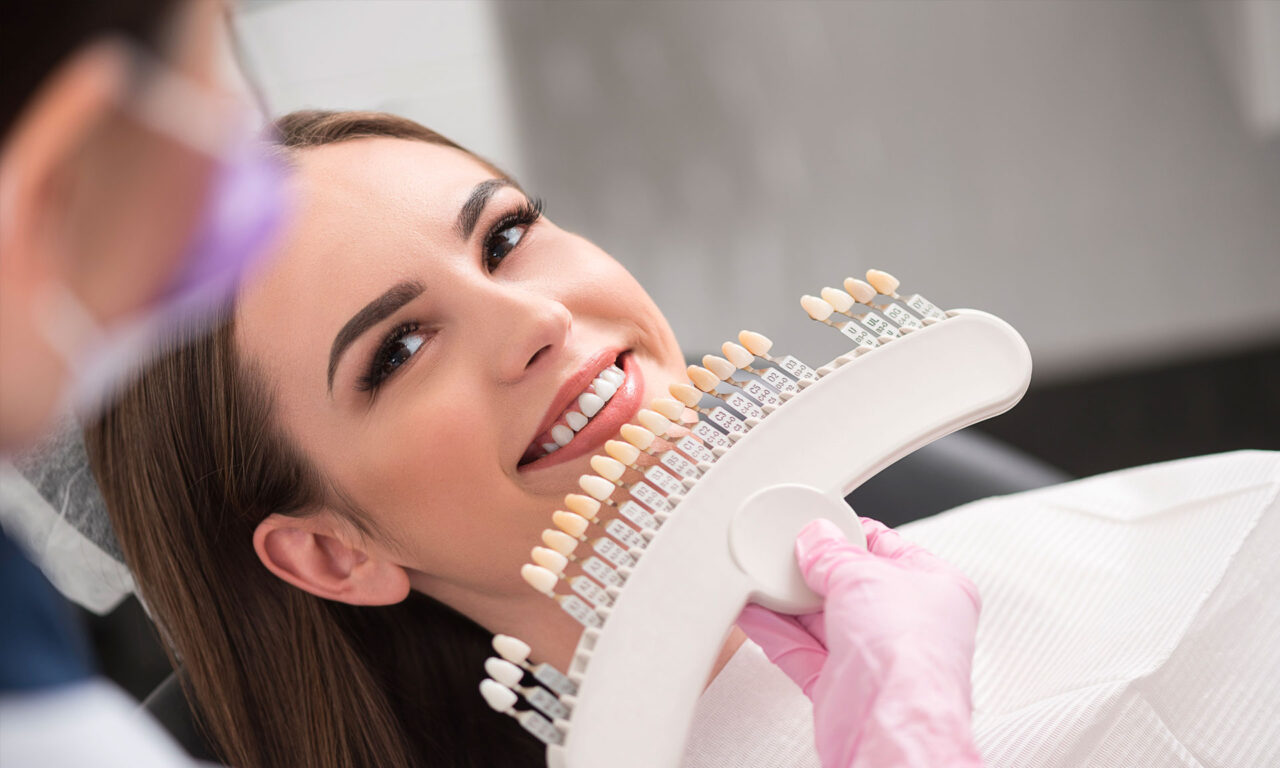
- Porcelain or tooth-colored crowns can be matched to your neighbouring teeth and are often chosen when appearance matters, such as for front teeth.
- Other materials differ in strength, durability and look. Your dentist will recommend one after examining your tooth.
Do crowns look natural? Modern crowns can be designed to closely match your other teeth in shade, shape and size. For front teeth, your dentist can discuss appearance during planning.
What happens during the crown process
- Exam and X-rays. Your dentist checks the tooth and the tissues around it to decide whether it can be restored and whether a crown is right.
- Treatment planning. Options might include a filling, crown, root canal treatment, extraction or another restoration.
- Tooth preparation. The tooth is shaped to make room for the crown. How much depends on its condition.
- Impression or digital record. We capture the shape of your prepared tooth and your bite so the crown can be made to fit. See impressionless dentistry.
- Making the crown. A custom crown is fabricated.
- Placement. The crown is fitted and bonded, and we check its fit, appearance and bite.
How long does a crown last?
It varies. Crown lifespan depends on oral hygiene, bite forces, grinding or clenching, diet and habits, the crown’s location, the condition of the tooth underneath, the quality of the restoration and regular dental care. If you grind your teeth, a custom night guard may help protect crowns and natural teeth.
Caring for your crown
A crown doesn’t make the tooth underneath immune to cavities or gum disease. Plaque near the gumline can still cause decay where the crown meets the tooth.
- Brush twice a day and clean between your teeth daily
- Keep regular hygiene visits and exams
- Don’t use your teeth to open packages or bite hard objects
- Wear a night guard if your dentist recommends one
Problems with a crown
My crown hurts
A new crown can feel different at first. Persistent or significant pain should be checked. It could be from the bite, sensitivity, gum irritation, decay, a crack, infection or a problem with the tooth’s nerve.
My crown is loose or fell out
- Keep the crown and bring it with you.
- Avoid chewing on that side.
- A temporary dental cement from a pharmacy may protect the tooth until your visit. Don’t use household glue or try permanent repairs yourself.
- Call us at (604) 585-2345. We’ll check whether the crown can be recemented or needs replacing, and look for decay or damage underneath.
My crown is broken
A minor problem may sometimes be repaired, but a badly fractured crown usually needs replacing. The tooth underneath should be examined too. If there’s sudden severe pain, see dental emergencies.
For facial swelling with fever, or trouble breathing or swallowing, go to the nearest hospital emergency department or call 911.
When a crown is not the right option
- A small cavity may only need a filling.
- A tooth with a serious internal infection may need root canal treatment first.
- A tooth that can’t be predictably restored may need to be extracted.
- A missing tooth needs a replacement option (bridge, implant or denture), not a crown on its own.
- A mainly cosmetic concern may be better treated with a veneer or whitening.
That’s why an exam comes first.
Related services
Dental fillings · Root canal treatment · Dental bridges · Dental implants · Dentures · Porcelain veneers · Night guards · Impressionless dentistry · Exam & cleaning · All dental services
Frequently asked questions
What is a dental crown?
A custom restoration that covers a damaged or weakened tooth to restore its shape, strength and appearance.
Do I need a crown or a filling?
It depends on how much healthy tooth remains. Smaller cavities are often treated with fillings, while significantly weakened teeth may need crowns.
Can a crown fix a cracked tooth?
Sometimes. It depends on the location and depth of the crack. Some fractures make a tooth difficult or impossible to restore.
Do all root canal teeth need crowns?
Not necessarily. It depends on how much tooth remains, which tooth it is and other clinical factors.
Can I get a cavity under a crown?
Yes. The natural tooth around and under a crown can still decay, so keep brushing, flossing and visiting the dentist.
What should I do if my crown falls out?
Keep the crown, avoid chewing on that side and call us. Don’t try permanent repairs yourself.
Can I eat normally after getting a crown?
Your dentist will give you instructions. Once the crown is placed and your dentist confirms it’s ready, you can generally return to your normal diet while avoiding habits that could damage it.
Can a night guard protect my crown?
If you grind or clench, a custom night guard may reduce the forces on natural teeth and crowns. Your dentist can tell you if you need one.
Are you accepting new patients?
Yes. We welcome new patients and accept walk-ins during office hours. You can also book online or call (604) 585-2345.
Book a dental crown consultation in Surrey
A damaged tooth doesn’t always have to be removed. When enough healthy tooth remains, a crown may restore its strength and appearance.
Book online · Call (604) 585-2345
Unit 1117, 10153 King George Blvd., Surrey, BC V3T 2W1, inside Central City Shopping Centre, next to the Passport Office.