
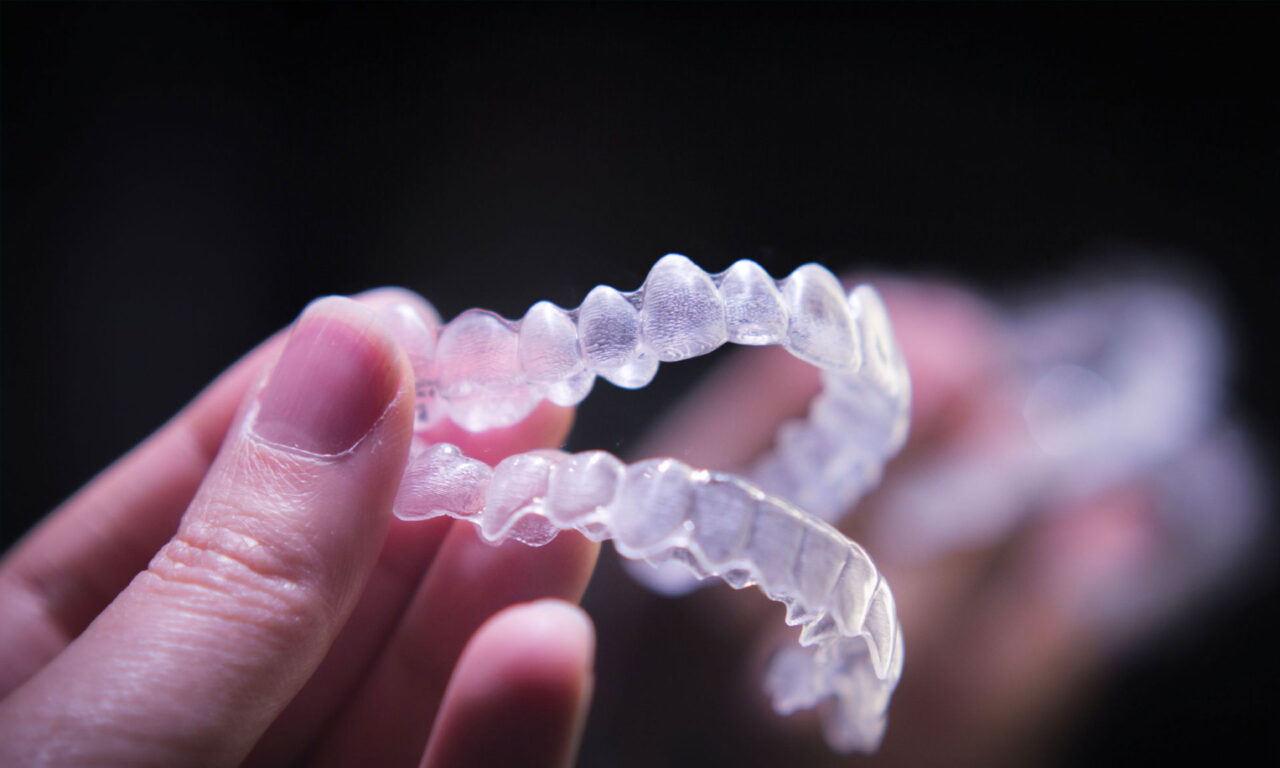
Invisalign in Surrey, BC
Invisalign is a way to straighten teeth using a series of clear, removable, custom-made aligners instead of metal brackets and wires. Each aligner moves your teeth a little, and you switch to the next one according to your treatment plan. At The Dental Group at Central City, our dentists first examine your teeth, gums and bite to decide whether clear aligners are right for you. We’re inside Central City Shopping Centre in Surrey, BC, and welcome new patients.
Quick facts
| Who it’s for | Many teens and adults with crowding, gaps or other alignment concerns. Not suitable for every case |
| First step | A consultation to examine your teeth, gums and bite and discuss your goals |
| Treatment time | Varies from patient to patient. Your dentist gives an estimate after your exam. |
| Provider status | |
| Cost | Depends on case complexity, number of aligners and treatment length. |
| Hours | Mon–Tue 9 AM–5 PM · Wed–Thu 9 AM–8 PM · Fri 9 AM–6 PM · Sat 9 AM–5 PM · Sun 11 AM–4 PM |
| Location | Unit 1117, 10153 King George Blvd., Surrey, BC V3T 2W1, inside Central City Shopping Centre, next to the Passport Office |
| Phone | (604) 585-2345 |
Book a new patient exam · Call (604) 585-2345
What can Invisalign treat?
Depending on the case, clear aligners may help with:
| Concern | What it means |
|---|---|
| Crowded teeth | Not enough space for teeth to line up |
| Gaps between teeth | Spaces that may be improved, depending on size, location and cause |
| Crooked, rotated or tilted teeth | Teeth positioned irregularly |
| Certain bite problems | Depends on severity and cause |
| Relapse | Teeth that shifted after earlier orthodontic treatment |
Invisalign isn’t automatically right for every orthodontic problem. After an exam, your dentist will explain what it can address and whether another option would suit you better.
Invisalign vs. traditional braces
| Invisalign | Traditional braces | |
|---|---|---|
| Appearance | Clear and generally much less noticeable | Metal brackets and wires |
| Removable? | Yes, removed to eat, brush and floss | No, fixed to the teeth |
| Eating | Take aligners out to eat, so most foods are fine | Some hard or sticky foods usually need to be avoided |
| Brushing and flossing | Normal routine, with no brackets to work around | Takes more care around brackets and wires |
| Your role | You must wear them as instructed for treatment to work | Less reliance on you wearing a device |
Neither is better for everyone. Both need professional planning and monitoring. Your dentist can recommend what fits your teeth and bite.
How Invisalign treatment works
- Consultation. Your dentist examines your teeth, gums, bite and overall oral health, and you talk about what you’d like to change.
- Digital scan and planning. A digital scan may be used to capture detailed information about your teeth so your team can plan tooth movement and design your aligners. See impressionless dentistry.
- Your treatment plan. The number of aligners and time needed depend on how much movement is required, case complexity, how consistently you wear your aligners, your bite and your goals.
- Receiving your aligners. We explain how to wear, remove, clean and care for them.
- Wearing them. You change to each new aligner as directed.
- Check-ups. Regular visits let your team confirm that teeth are moving as planned and adjust the plan if needed.
- Retention. After active treatment, retainers are usually recommended to help keep your teeth in their new positions.
Wearing your aligners
For treatment to work as planned, aligners need to be worn as instructed. Align Technology generally advises wearing them about 20 to 22 hours a day, but your dentist will give you your own instructions. Not wearing them as instructed can slow progress.
- Eating and drinking: Take them out to eat and to drink anything other than water. Water is generally the best choice while wearing them. Other drinks can stain aligners or trap sugar against your teeth.
- Cleaning: Rinse when you remove them, clean as your team advises, brush your teeth before putting them back in when possible, store them in their case and avoid very hot water, which can distort them.
- Oral hygiene: Keep brushing twice a day, cleaning between your teeth and having regular exams and hygiene visits.
Is Invisalign painful?
You may feel pressure or tightness, or mild discomfort, when you start a new aligner. This is normal because the aligners are designed to move your teeth, and it’s usually described as pressure rather than severe pain. Call us if you have significant or lasting pain.
Is Invisalign really invisible?
Aligners are designed to be clear and discreet, but they may still be visible up close. How noticeable they are depends on your teeth, any attachments and the stage of treatment.
Attachments. Some cases use small tooth-colored attachments on selected teeth to help aligners apply more precise forces. Not every patient needs the same number or type. Your dentist will tell you whether yours includes them.
Do you need dental work before Invisalign?
Sometimes. Existing problems may need to be treated first or alongside:
- Cavities (see dental fillings)
- Broken or structurally weak teeth (may need a crown)
- Gum disease or infection
- Damaged restorations
The order of treatment depends on your oral health.
If you already have dental work: Fillings, crowns or bridges don’t automatically rule out Invisalign, but your dentist has to check their condition and position.
If you have an implant: Implants don’t move through bone the way natural teeth do, so their position has to be considered in your plan. If you’re missing a tooth and thinking about both aligners and an implant, the order of treatment needs careful planning.
If you grind or clench: Tell your dentist before starting. A night guard or another approach may be considered.
After Invisalign: retainers
Finishing your last aligner doesn’t mean your teeth stay put forever. Teeth naturally shift over time, so retainers are commonly recommended after active treatment. Follow your team’s instructions, keep up regular exams and cleanings, and contact us if you notice your teeth shifting instead of waiting.
Teens and adults
- Adults: Many adults choose Invisalign for a discreet option that fits a professional routine. You still need a full dental assessment first.
- Teens: Some teens are good candidates. It depends on dental development, orthodontic needs, ability to follow aligner instructions and overall oral health. Parents and teens can discuss this at a consultation. See also children’s dentistry.
Invisalign and cosmetic dentistry
Aligners mainly change tooth position. Porcelain veneers mainly change shape and look, and teeth whitening changes color. Some people straighten first and then consider veneers or whitening. Your dentist can suggest an order for your goals.
Related services
Impressionless dentistry · Teeth whitening · Porcelain veneers · Night guards · Exam & cleaning · Hygiene care · Dental crowns · Dental implants · All dental services
Frequently asked questions
How much does Invisalign cost in Surrey, BC?
Cost depends on case complexity, the number of aligners and treatment length. We give an estimate after a consultation.
Is Invisalign better than braces?
Neither is better for everyone. Invisalign uses clear, removable aligners, and braces use fixed brackets and wires. Your dentist will recommend what suits your needs.
How long does Invisalign take?
It varies with the complexity of your case and how consistently you wear your aligners. Your dentist can give a more personal estimate after examining your teeth and bite.
Can I eat normally with Invisalign?
Yes. You take the aligners out to eat, and brush before putting them back when possible.
Can I remove my aligners?
Yes, that’s one of the main advantages. Remove them as your dentist instructs, especially to eat and to clean your teeth.
Does Invisalign work for crowded teeth?
It can treat many cases of crowding, depending on severity and cause. A consultation will tell you whether it suits your case.
Can Invisalign close gaps between teeth?
It can close certain gaps. Your dentist will look at the size, location and cause of the spacing.
Can I get Invisalign if I have crowns or fillings?
Usually existing dental work doesn’t rule it out, but your dentist will check your restorations and oral health first.
Do I need a cleaning before Invisalign?
Good oral hygiene matters before and during treatment. Your dentist may recommend an exam and cleaning first.
Do I need retainers afterward?
Retainers are commonly recommended after active treatment to help keep your teeth in their new positions.
Can teenagers get Invisalign?
Some can. It depends on dental development, orthodontic needs, oral health and the ability to follow instructions.
Are you accepting new patients?
Yes. We welcome new patients and accept walk-ins during office hours. You can also book online or call (604) 585-2345.
Book an Invisalign consultation in Surrey
If you’d like straighter teeth without metal braces, the first step is an exam to see whether clear aligners are right for you.
Book online · Call (604) 585-2345
Unit 1117, 10153 King George Blvd., Surrey, BC V3T 2W1, inside Central City Shopping Centre, next to the Passport Office.