
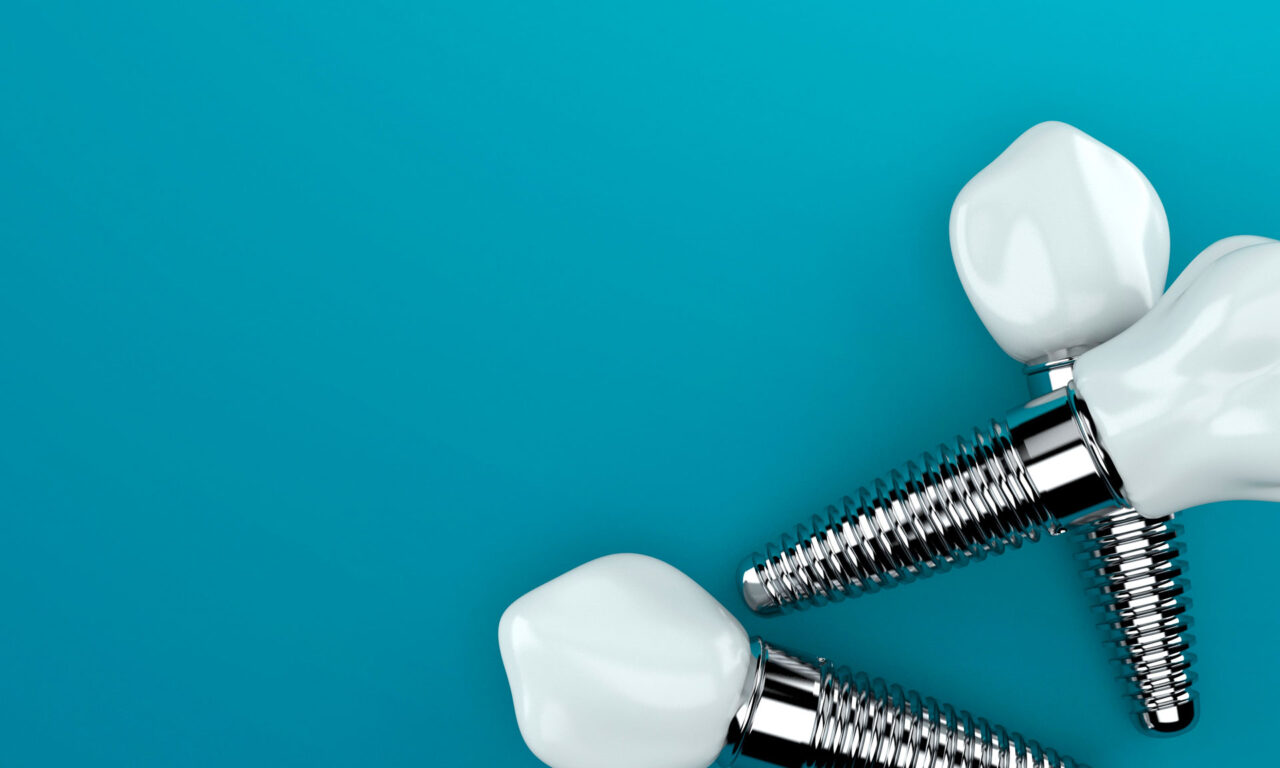
Dental Implants in Surrey, BC
Missing teeth can affect more than the appearance of your smile. Gaps may make it harder to chew comfortably, affect how you speak, and change the way you feel about your smile.
Dental implants in Surrey, BC can provide a stable foundation for replacing missing teeth with a natural-looking dental restoration.
At The Dental Group at Central City, we evaluate your oral health, remaining teeth, gums, and jawbone to determine whether dental implants may be appropriate for your individual needs.
Our dental office is conveniently located inside The Central City Shopping Centre at:
1117-10153 King George Blvd.
Surrey, BC V3T 2W1
What Are Dental Implants?
A dental implant is a tooth-replacement solution designed to replace the root portion of a missing tooth.
An implant is placed into the jawbone and can provide a stable foundation for a dental restoration such as a crown.
Depending on how many teeth are missing and your individual treatment plan, dental implants may be used to support:
- A single replacement tooth
- Multiple replacement teeth
- Implant-supported dentures
- Other customized dental restorations
Dental implants are different from traditional removable dentures because the implant is designed to provide a fixed foundation within the jaw.
Dental Implants in Surrey, BC
If you are looking for a dental implant dentist in Surrey, BC, your treatment should begin with a comprehensive evaluation.
At The Dental Group at Central City, your dentist can assess:
- The location and number of missing teeth
- The condition of your remaining teeth
- Gum health
- Jawbone condition
- Your bite
- Existing dental restorations
- Overall oral health
- Your tooth-replacement goals
The information gathered during your examination helps determine whether dental implants are appropriate and whether additional treatment may be required.
Why Replace Missing Teeth?
Replacing a missing tooth can help restore the appearance and function of your smile.
Depending on your situation, tooth replacement may help you:
- Restore chewing function
- Improve the appearance of a gap
- Support a more complete smile
- Replace a severely damaged or missing tooth
- Improve confidence when smiling
- Provide a stable foundation for a dental restoration
Your dentist can help you compare implants with other tooth-replacement options based on your oral health and personal needs.
How Do Dental Implants Work?
Dental implant treatment generally involves several stages.
1. Comprehensive Dental Examination
The first step is an evaluation of your teeth, gums, bite, and jawbone.
Your dentist will discuss your concerns and determine what type of tooth replacement may be appropriate.
2. Treatment Planning
If an implant is being considered, your dentist will develop a treatment plan based on the missing tooth or teeth, available bone, surrounding teeth, and desired restoration.
3. Implant Placement
The implant is surgically placed into the jawbone.
The implant serves as a foundation for the eventual dental restoration.
4. Healing and Integration
After placement, the implant requires a period of healing.
During this stage, the implant can become integrated with the surrounding bone, helping create a stable foundation for the restoration.
5. Final Restoration
Once the implant has healed appropriately, a custom restoration can be attached.
For a single missing tooth, this may involve a dental crown designed to complement the surrounding teeth.
Learn more about:
https://thedentalgroupatcentralcity.com/dental-crowns/
Single-Tooth Dental Implants
A single missing tooth does not necessarily require replacement with a removable appliance.
A single dental implant can provide a foundation for an individual replacement tooth.
A typical single-tooth implant restoration may involve:
- An implant
- An abutment or connecting component
- A custom dental crown
The final restoration is designed to fit within your existing smile.
Your dentist can evaluate the surrounding teeth and determine whether a single-tooth implant is an appropriate option.
Multiple Dental Implants
When several teeth are missing, treatment can be customized according to the location and number of missing teeth.
Depending on your situation, multiple implants may support individual restorations or another type of tooth-replacement solution.
Your dentist can discuss the available options after evaluating your teeth, gums, jawbone, and overall oral health.
Implant-Supported Dentures
Patients who are missing many or all of their teeth may sometimes be candidates for implant-supported dentures.
Traditional dentures are removable appliances.
Implant-supported dentures use dental implants as part of the support system for the replacement teeth.
The appropriate design depends on the number of implants, available bone, oral health, and individual treatment plan.
If you are considering dentures, learn more about:
https://thedentalgroupatcentralcity.com/dentures/
Dental Implants vs. Dental Bridges
Dental implants and dental bridges can both be used to replace missing teeth, but they work differently.
A dental bridge uses supporting teeth or dental restorations to hold a replacement tooth or teeth in position.
A dental implant is placed into the jawbone and can provide a foundation for an individual restoration or other implant-supported treatment.
The best option depends on your oral health, the location of the missing tooth, the condition of neighbouring teeth, bone support, and your treatment goals.
Learn more about dental bridges:
https://thedentalgroupatcentralcity.com/dental-bridges/
Dental Implants vs. Dentures
Dentures are removable dental appliances that can replace multiple missing teeth or a complete set of teeth.
Dental implants are placed into the jawbone and can support fixed or implant-supported restorations depending on the treatment plan.
Some patients may benefit from traditional dentures, while others may be candidates for implant-supported treatment.
Your dentist can help you compare the options.
https://thedentalgroupatcentralcity.com/dentures/
Dental Implants vs. Saving a Natural Tooth
A missing tooth does not always mean an implant is immediately necessary.
If a damaged or infected tooth can be predictably saved, preserving the natural tooth may be preferable.
For example, root canal treatment can sometimes allow an infected tooth to remain in place.
Learn more:
https://thedentalgroupatcentralcity.com/root-canal-treatment/
If a tooth cannot be predictably restored because of severe damage or decay, an extraction may be recommended. After extraction, your dentist can discuss tooth-replacement options such as an implant, bridge, or denture.
https://thedentalgroupatcentralcity.com/dental-extractions/
Do You Have Enough Bone for a Dental Implant?
Adequate bone support is an important consideration when planning dental implant treatment.
When a tooth has been missing for some time, changes in the jawbone can occur.
Some patients may have enough bone for implant placement, while others may require additional treatment before an implant can be placed.
A dental examination allows your dentist to evaluate your individual situation.
Dental Bone Grafting Before Implants
A bone graft may sometimes be recommended when additional bone support is needed for an implant treatment plan.
Bone grafting is not required for every implant patient.
If your dentist determines that the available bone is insufficient for the planned implant, a bone-grafting procedure may be considered before or as part of implant treatment.
Learn more about:
https://thedentalgroupatcentralcity.com/bone-grafts/
Dental Implants After Tooth Extraction
If a tooth cannot be saved and needs to be removed, your dentist can discuss what to do about the missing tooth afterward.
Depending on the circumstances, possible replacement options may include:
- Dental implants
- Dental bridges
- Partial dentures
- Complete dentures
The timing of implant placement depends on factors such as the condition of the tooth, surrounding tissues, available bone, and your individual treatment plan.
Learn more about dental extractions:
https://thedentalgroupatcentralcity.com/dental-extractions/
Are You a Candidate for Dental Implants?
Dental implant candidacy varies from patient to patient.
Your dentist may consider:
- The number of missing teeth
- Jawbone condition
- Gum health
- The condition of neighbouring teeth
- Your bite
- Overall oral health
- Your ability to maintain good oral hygiene
- Your treatment expectations
Having a missing tooth does not automatically mean you are ready for implant placement.
A comprehensive examination is necessary to determine the appropriate treatment approach.
Gum Health and Dental Implants
Healthy gums are an important part of maintaining a successful tooth-replacement plan.
If you have gum inflammation, recession, or another periodontal concern, your dentist may recommend addressing the problem before proceeding with implant treatment.
Professional dental hygiene care can help maintain the health of your teeth and gums.
https://thedentalgroupatcentralcity.com/hygiene-care/
If you have gum recession or insufficient soft tissue in a particular area, a soft tissue graft may sometimes be considered.
https://thedentalgroupatcentralcity.com/soft-tissue-graft/
Dental Implants and Oral Hygiene
Dental implants do not eliminate the need for daily oral hygiene.
You still need to care for the implant restoration and surrounding gums.
Good habits include:
- Brushing regularly
- Cleaning between teeth
- Following your dentist’s recommendations
- Maintaining professional dental hygiene appointments
- Attending regular dental examinations
- Reporting changes such as bleeding, discomfort, or looseness
Regular dental care allows your dentist to monitor your natural teeth, gums, and implant restoration.
What Can You Eat With Dental Implants?
Once your implant treatment and final restoration are complete, your dentist can provide individualized instructions regarding eating and oral care.
The goal of treatment is to provide a stable tooth-replacement solution that can function as part of your everyday smile.
During the healing period, however, you may receive specific instructions regarding foods, chewing, and care of the treatment area.
Always follow the instructions provided by your dental team.
How Long Does Dental Implant Treatment Take?
Dental implant treatment is not identical for every patient.
Treatment time can depend on:
- Whether a tooth needs to be extracted
- The number of implants
- Available jawbone
- Whether bone grafting is required
- Healing time
- The type of final restoration
- Your overall oral health
Some patients may require additional treatment before implant placement, which can extend the overall treatment timeline.
Your dentist can provide a more individualized estimate after examining your teeth and jawbone.
How Long Do Dental Implants Last?
Dental implants are designed as a long-term tooth-replacement solution.
However, no dental restoration should be considered completely maintenance-free.
Long-term success depends on factors such as:
- Oral hygiene
- Gum health
- Bite forces
- Teeth grinding
- Regular dental care
- Overall health
- Proper maintenance of the restoration
Regular examinations and professional cleanings can help your dental team monitor the health of your implant and surrounding tissues.
Dental Implants and Teeth Grinding
If you clench or grind your teeth, tell your dentist before receiving implant treatment.
Excessive biting forces can place stress on natural teeth and dental restorations.
Your dentist can evaluate your bite and determine whether a custom night guard may be appropriate.
Learn more:
https://thedentalgroupatcentralcity.com/night-guards/
Dental Implants and Existing Dental Work
Existing crowns, bridges, fillings, dentures, or other restorations may affect your overall treatment plan.
Your dentist will consider your existing dental work when planning tooth replacement.
For example, a patient with several missing teeth and existing restorations may have different treatment options from a patient with one missing tooth and otherwise healthy teeth.
The objective is to create a treatment plan that fits your overall oral health rather than treating the missing tooth in isolation.
Dental Implants for Older Adults
Age alone does not determine whether someone can receive a dental implant.
Instead, your dentist will evaluate your overall oral health, bone condition, gum health, existing teeth, and individual circumstances.
Older adults who have lost one or more teeth may have several tooth-replacement options available.
A dental consultation can help determine which option is most appropriate.
Dental Implants for Front Teeth
Replacing a missing front tooth involves both functional and cosmetic considerations.
The replacement restoration should fit naturally with the surrounding teeth in terms of shape, colour, size, and overall appearance.
Your dentist can evaluate the surrounding teeth and discuss the most appropriate restoration for your situation.
Dental Implants for Back Teeth
Missing back teeth can affect chewing function.
A dental implant can provide a stable foundation for replacing a missing posterior tooth when appropriate.
Your dentist will consider the available bone, surrounding teeth, bite, and overall oral health before recommending treatment.
Can a Dental Implant Replace a Broken Tooth?
A broken tooth does not automatically need to be replaced with an implant.
If the tooth can be restored predictably, your dentist may recommend a treatment designed to preserve the natural tooth.
Depending on the extent of damage, treatment could include a filling, crown, or root canal.
Learn more:
https://thedentalgroupatcentralcity.com/dental-crowns/
If the tooth cannot be saved and extraction is necessary, an implant may be one of the replacement options to consider.
Dental Implants After an Extraction
If you need an extraction, it is useful to discuss tooth replacement before the procedure whenever possible.
Planning ahead allows your dentist to consider:
- The condition of the extraction site
- Available bone
- Timing of implant placement
- Whether bone preservation or grafting may be needed
- The final restoration
- Alternative replacement options
This can help create a more coordinated treatment plan.
Dental Implants in Surrey Near Central City
The Dental Group at Central City is conveniently located inside The Central City Shopping Centre at:
1117-10153 King George Blvd.
Surrey, BC V3T 2W1
Our location provides convenient access for patients in Surrey and surrounding communities who are looking for comprehensive dental care.
Dental implant treatment may involve restorative, surgical, preventive, and hygiene services. Having these services available within the same dental practice can help your care team consider your broader oral health when planning treatment.
Why Choose The Dental Group at Central City for Dental Implants?
Replacing missing teeth is a significant dental decision.
At The Dental Group at Central City, your treatment begins with an evaluation of your individual dental needs.
Our team can assess the health of your teeth and gums, discuss your tooth-replacement options, and determine whether dental implants may be appropriate.
Because the practice also provides restorative and general dental services, your implant treatment can be considered alongside other options such as crowns, bridges, dentures, extractions, bone grafting, and preventive care.
Frequently Asked Questions About Dental Implants
What is a dental implant?
A dental implant is a tooth-replacement component designed to be placed into the jawbone and provide a stable foundation for a dental restoration.
Are dental implants permanent?
Dental implants are designed as a long-term tooth-replacement solution, but their longevity depends on oral hygiene, gum health, bite forces, maintenance, and other individual factors.
Can one implant replace one tooth?
Yes. A single dental implant can be used as part of a treatment plan to replace one missing tooth with a custom restoration.
Can dental implants replace several missing teeth?
Yes. Depending on the situation, multiple implants can support individual restorations or other implant-supported tooth-replacement solutions.
Can dental implants support dentures?
In appropriate cases, dental implants can be used as part of an implant-supported denture treatment plan.
Do I need a bone graft before an implant?
Not necessarily. Some patients have adequate bone for implant placement, while others may need bone grafting or another procedure to improve the available bone support.
Can I get an implant after a tooth extraction?
An implant may be an option after an extraction, but the timing depends on the condition of the extraction site, available bone, healing, and your individual treatment plan.
Are dental implants better than dentures?
Neither option is automatically better for every patient. Implants and dentures have different characteristics, and the appropriate solution depends on your oral health, number of missing teeth, bone support, budget, preferences, and treatment goals.
Are dental implants better than bridges?
Implants and bridges work differently. An implant is placed into the jawbone, while a bridge uses supporting teeth or restorations. Your dentist can help compare the options for your specific situation.
Can dental implants look natural?
The final restoration can be designed to complement your surrounding teeth in terms of colour, shape, and size. The appearance depends on the individual treatment plan and restoration.
How long does the dental implant process take?
Treatment time varies. Some patients require additional procedures such as bone grafting or tooth extraction before implant placement, which can affect the overall timeline.
Can I get dental implants if I have gum disease?
Your dentist should evaluate and address active gum problems before proceeding with implant treatment. Gum health is an important consideration in implant planning and maintenance.
Can I get dental implants if I grind my teeth?
Teeth grinding does not automatically rule out implant treatment, but it should be discussed with your dentist. Additional evaluation or protection such as a night guard may be recommended.
Schedule a Dental Implant Consultation in Surrey, BC
If you are missing one or more teeth and want to understand your replacement options, a dental implant consultation can help you make an informed decision.
At The Dental Group at Central City, we can evaluate your oral health, discuss your goals, and compare dental implants with alternatives such as bridges and dentures.
If additional treatment such as an extraction or bone graft is required, your treatment plan can take those needs into consideration.
If you are looking for dental implants in Surrey, BC, contact The Dental Group at Central City to schedule a consultation.
The Dental Group at Central City
1117-10153 King George Blvd.
Surrey, BC V3T 2W1
Inside The Central City Shopping Centre
Phone: (604) 585-2345