
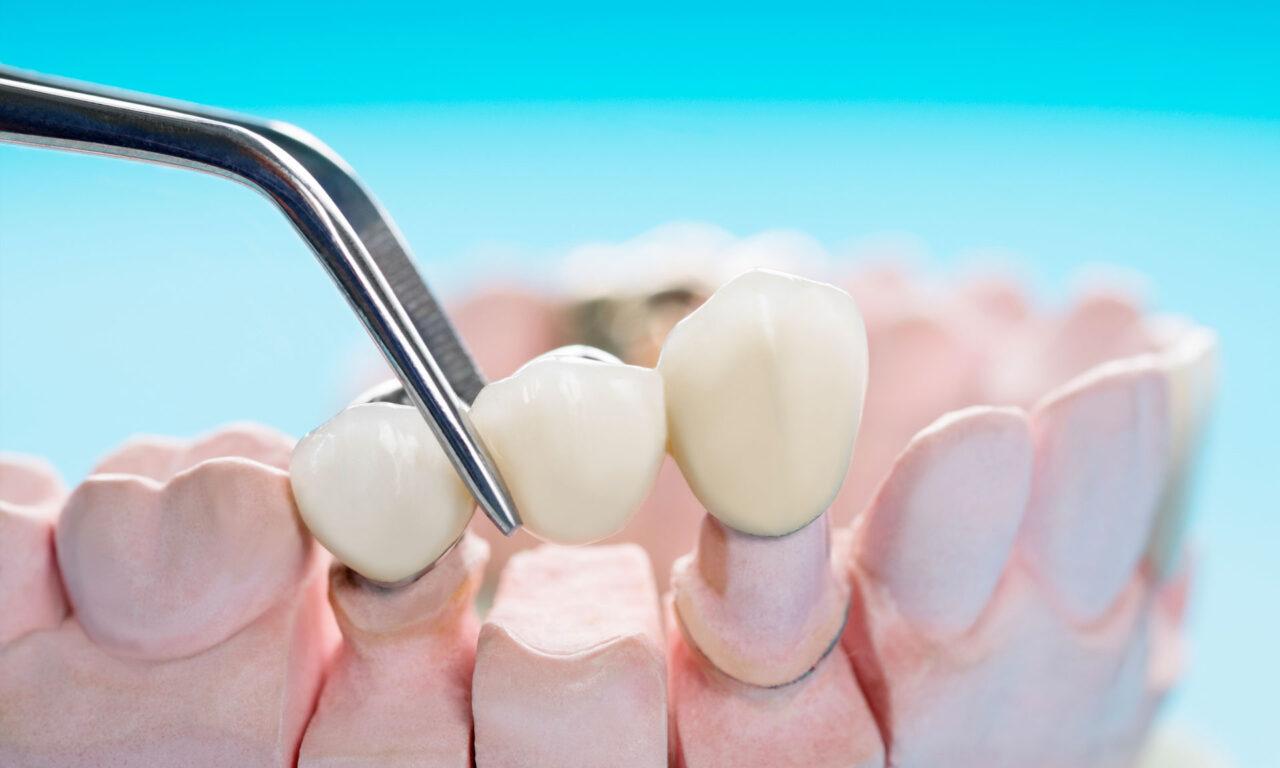
Dental Bridges in Surrey, BC
A dental bridge is a fixed restoration that replaces one or more missing teeth. A replacement tooth (called a pontic) is joined to crowns on the neighbouring teeth, or to implants, so the gap is filled and chewing, speech and your smile are restored. At The Dental Group at Central City, our dentists examine your teeth, gums and bite and explain whether a bridge, implant or denture suits you best. We’re inside Central City Shopping Centre in Surrey, BC, and welcome new patients.
Quick facts
| What it replaces | One or several missing teeth |
| Types discussed | Traditional bridge, cantilever bridge, implant-supported bridge. |
| Visits | |
| Cost | Depends on the number of missing teeth, bridge type, materials and any other treatment needed. |
| Hours | Mon–Tue 9 AM–5 PM · Wed–Thu 9 AM–8 PM · Fri 9 AM–6 PM · Sat 9 AM–5 PM · Sun 11 AM–4 PM |
| Location | Unit 1117, 10153 King George Blvd., Surrey, BC V3T 2W1, inside Central City Shopping Centre, next to the Passport Office |
| Phone | (604) 585-2345 |
Book a new patient exam · Call (604) 585-2345
Bridge, implant or denture?
| Dental bridge | Dental implant | Denture | |
|---|---|---|---|
| What it is | Fixed tooth (or teeth) held by crowns on neighbouring teeth or by implants | A post placed in the jawbone that supports a crown, bridge or denture | Removable replacement teeth |
| Supported by | Neighbouring teeth (traditional) or implants | The jawbone | Gums, and sometimes remaining teeth or implants |
| Usually used for | One or a few missing teeth, when neighbouring teeth can support it | One tooth or many, when there is enough bone and good oral health | Several missing teeth or a full arch |
| Things to consider | Neighbouring teeth usually need to be reshaped for crowns. Cleaning under the bridge takes extra care | Needs enough bone, and sometimes a bone graft. Treatment takes longer | Removable. May need adjustments as your mouth changes |
No option is best for everyone. The right choice depends on where the gap is, the health of nearby teeth and gums, bone support, your bite and your goals.
Why replace a missing tooth?
A gap can affect chewing, speech, bite balance and your confidence. Neighbouring teeth may drift into the space, which changes how forces are spread when you chew. Replacing the tooth can help restore function and keep your smile more complete.
Types of dental bridges
- Traditional bridge: crowns on the teeth on each side of the gap hold the replacement tooth. Used when the neighbouring teeth can provide enough support.
- Cantilever bridge: supported from one side only. Used in specific situations depending on where the tooth is missing and the forces on it.
- Implant-supported bridge: supported by dental implants instead of natural teeth. Often discussed when several teeth are missing.
The right design depends on your situation.
Is a bridge right for you?
A bridge may be an option if:
- One or a few teeth are missing, or you recently had a tooth extracted
- The gap affects your smile or chewing
- The neighbouring teeth are healthy enough to support a bridge
- You want a fixed option rather than a removable denture
A bridge may not be the best choice if the supporting teeth are weak or heavily decayed, or if another option such as an implant would better protect the neighbouring teeth. Your dentist will explain why they recommend one option over another.
What happens during the bridge process
- Exam. Your dentist checks the missing tooth area, neighbouring teeth, gums, bite, existing dental work and bone. X-rays or other imaging may be recommended. See exam & cleaning.
- Treatment planning. We discuss whether a bridge is suitable, other replacement options and how color, shape and bite will be handled.
- Preparing the supporting teeth. For a traditional bridge, the teeth on each side are reshaped to hold crowns. Damaged supporting teeth may need treatment first, such as a filling or crown.
- Impression or digital record. We record the shape of your teeth so the bridge can be made to fit. See impressionless dentistry.
- Making the bridge. It’s fabricated to match the color, shape and size of your natural teeth.
- Placement. We check fit, appearance, bite and comfort before securing it, and show you how to care for it.
Caring for a dental bridge
A bridge needs the same care as natural teeth, plus a bit more attention underneath it.
- Brush twice a day and clean carefully around the bridge
- Clean underneath the replacement tooth and around the supporting teeth. Your dental team can show you floss threaders, interdental brushes or other tools that suit your bridge
- Keep regular hygiene visits and exams
- Don’t use your teeth to open packages or bite hard objects
- If you grind or clench, ask about a night guard
Can a bridge get cavities? The bridge material itself can’t decay like a natural tooth, but the teeth that support it can. If decay develops around a supporting tooth, treatment such as a filling or crown may be needed.
How long does a bridge last? It varies with oral hygiene, gum health, decay, bite forces, grinding, the condition of the supporting teeth and regular dental care.
If your bridge feels loose
Don’t try to re-cement or repair it yourself. Avoid chewing hard foods on that side and call us at (604) 585-2345. A bridge can loosen because of problems with a supporting tooth, decay, damage, heavy bite forces or wear. For significant pain or swelling, see dental emergencies. For facial swelling with fever, or trouble breathing or swallowing, go to the nearest hospital emergency department or call 911.
Replacing a tooth after an extraction
If a tooth can’t be saved and has to be extracted, your dentist can discuss a bridge, an implant or a denture. Timing depends on how the extraction site heals, the surrounding teeth and gums and the restoration planned. Some patients need extra treatment first. For example, an implant may need a bone graft if there is not enough bone.
Comfort and appearance
A well-fitted bridge should feel comfortable for everyday use, though it may take a little time to get used to how it feels with your tongue and bite. Call us if you have persistent pain, sensitivity, trouble chewing or an uneven bite. Your dentist considers tooth color, shape, size, smile line and neighbouring teeth to help the bridge look natural. For cosmetic concerns on healthy teeth, see porcelain veneers or teeth whitening.
Related services
Dental implants · Dentures · Dental crowns · Dental fillings · Dental extractions · Bone grafts · Night guards · Hygiene care · All dental services
Frequently asked questions
How much do dental bridges cost in Surrey?
Cost depends on the number of missing teeth, bridge type, supporting teeth, materials and any additional treatment. An exam is needed to give an estimate.
How many teeth can a bridge replace?
One or several, depending on where the gap is and how much support is available. Your dentist will advise on the right design.
Is a bridge better than an implant?
They are different options, and neither is better for everyone. The choice depends on your oral health, bone, neighbouring teeth and goals.
Can a bridge replace a back tooth?
Often, yes, depending on the location, the condition of nearby teeth, bite forces and available support.
Can I eat normally with a bridge?
A well-fitted bridge is designed to restore chewing. Your dentist may suggest avoiding very hard or sticky foods at first.
How do I clean under a bridge?
Clean around the supporting teeth and underneath the replacement tooth. Your dental team will show you the best tools and technique.
What happens if I don’t replace a missing tooth?
Chewing can be affected, neighbouring teeth may shift into the gap, and bite forces can change. Your dentist can explain whether replacement is recommended.
Can I get a bridge right after an extraction?
It depends on how the extraction site heals and on the type of restoration. Your dentist will recommend a timeline.
Are you accepting new patients?
Yes. We welcome new patients and accept walk-ins during office hours. You can also book online or call (604) 585-2345.
Book a dental bridge consultation in Surrey
A missing tooth doesn’t have to mean a permanent gap. A consultation can help you understand whether a bridge, implant, denture or another option suits you.
Book online · Call (604) 585-2345
Unit 1117, 10153 King George Blvd., Surrey, BC V3T 2W1, inside Central City Shopping Centre, next to the Passport Office.