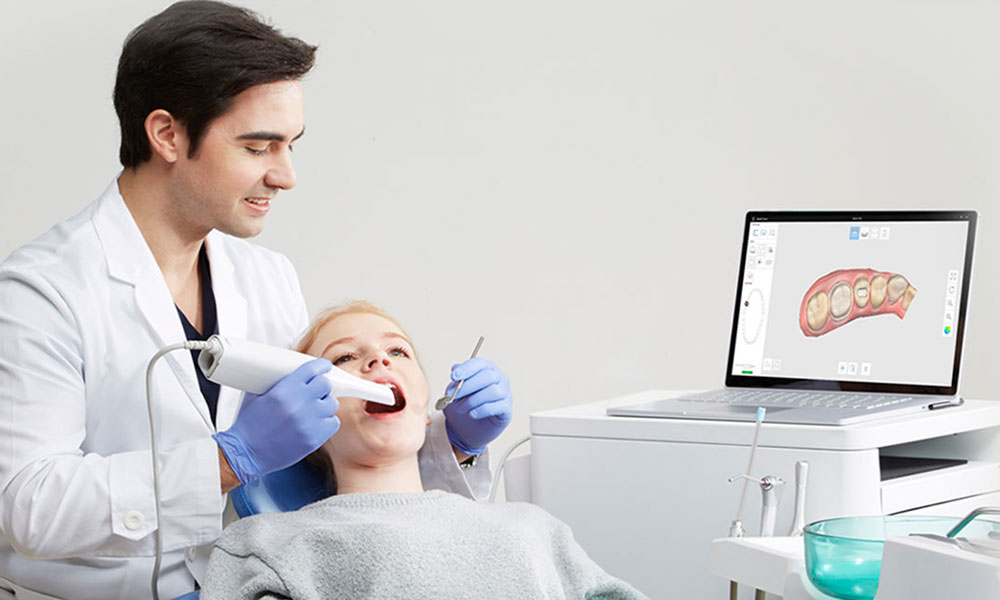
Impressionless Dentistry

Impressionless Dentistry

Impressionless Dentistry in Surrey, BC

Traditional dental impressions can be uncomfortable for some patients, especially when impression material is placed in the mouth for an extended period of time. Impressionless dentistry in Surrey, BC offers a modern alternative by using digital technology to capture detailed information about your teeth and oral structures.

Digital impressions can be used as part of treatment planning for a variety of dental procedures, including crowns, bridges, dentures, Invisalign treatment, and other restorative or cosmetic dental services.

At The Dental Group at Central City, digital dentistry can help make the treatment process more convenient and comfortable while providing detailed information for planning your care.

Our dental office is conveniently located inside Central City Shopping Centre at 1117-10153 King George Blvd., Surrey, BC.

What Is Impressionless Dentistry?

Impressionless dentistry refers to dental treatment that uses digital scanning technology instead of traditional physical impression materials for certain procedures.

Rather than placing a tray filled with impression material into your mouth, a digital scanner can capture detailed images and measurements of your teeth and surrounding oral structures.

The digital information can then be used to help plan and design dental restorations or orthodontic treatment.

Depending on your treatment, digital impressions may be useful for:

  • Dental crowns
  • Dental bridges
  • Dentures
  • Invisalign treatment
  • Dental implants
  • Restorative dentistry
  • Cosmetic dental treatment
  • Treatment planning and diagnostics

Not every dental procedure requires a digital impression, but digital scanning can be a valuable part of modern dental care.

How Does Digital Impression Technology Work?

Digital impression technology uses a handheld intraoral scanner to capture images of your teeth.

The scanner is moved around the mouth while it records detailed information about the teeth and oral structures.

The resulting digital model can provide your dental team with a three-dimensional representation of your mouth.

This information can then be used to help plan treatment and design certain dental restorations.

Unlike traditional impressions, there is no need to fill a large tray with impression material and hold it in your mouth while the material sets.

Benefits of Impressionless Dentistry

More Comfortable for Many Patients

Some patients find traditional dental impressions uncomfortable because of the size of the impression tray or the sensation of impression material in the mouth.

Digital scanning eliminates the need for many traditional impression materials.

No Traditional Impression Material

Digital impressions do not require the traditional putty-like material used in conventional impression procedures.

This can make the experience more convenient for patients who dislike the sensation of traditional impressions.

Detailed Digital Information

Digital scanners can capture detailed information about the teeth and surrounding structures.

The digital model can help the dental team evaluate tooth shape, spacing, alignment, and other characteristics relevant to treatment planning.

Efficient Treatment Planning

Digital information can be incorporated into the planning process for many types of dental treatment.

This can be particularly useful when designing restorations that need to fit precisely.

Easy Digital Storage

Digital information can be stored electronically as part of your dental records and treatment planning.

This eliminates the need to physically store traditional impression molds for every case.

Who Can Benefit From Impressionless Dentistry?

Digital impressions may be useful for many patients, including people who are:

  • Receiving a dental crown
  • Getting a dental bridge
  • Considering dentures
  • Planning Invisalign treatment
  • Exploring dental implants
  • Receiving restorative dental treatment
  • Interested in modern digital dental technology
  • Uncomfortable with traditional dental impressions

Your dentist will determine whether digital scanning is appropriate for your specific procedure.

Impressionless Dentistry for Dental Crowns

Dental crowns are one of the common applications for digital impressions.

A crown needs to fit accurately over the prepared tooth while also working properly with the surrounding teeth and your bite.

Digital scanning can capture detailed information that can be used during the crown design and treatment-planning process.

If you are considering a crown, learn more about our Dental Crowns in Surrey, BC.

A crown may be recommended for a tooth that has:

  • Significant decay
  • A large filling
  • A crack or fracture
  • Extensive structural damage
  • Significant wear
  • Previous root canal treatment

The appropriate restoration depends on the amount of healthy tooth structure that remains.

Digital Impressions for Dental Bridges

Dental bridges replace one or more missing teeth and need to fit accurately with the surrounding teeth and bite.

Digital impressions can help capture the position and shape of the teeth involved in bridge treatment.

This information may be used when designing a restoration intended to look natural and function comfortably.

If you are missing one or more teeth, learn more about Dental Bridges in Surrey.

Impressionless Dentistry and Dentures

Digital technology can also play a role in the planning and design of certain denture treatments.

Dentures need to fit the patient’s oral structures appropriately while providing useful function and acceptable comfort.

Digital information may assist with aspects of the treatment planning process.

If you are missing several teeth or an entire dental arch, learn more about Dentures in Surrey, BC.

Digital Scanning and Invisalign

Digital scanning can also be useful in orthodontic treatment planning.

For patients considering Invisalign, digital information can help create a three-dimensional representation of the teeth.

This information may be used to assist with treatment planning and the design of clear aligners.

If you are interested in straightening your teeth without traditional braces, learn more about Invisalign in Surrey.

Your dentist will determine whether Invisalign is appropriate based on your teeth, bite, oral health, and treatment goals.

Impressionless Dentistry and Dental Implants

Digital technology can also support aspects of dental implant treatment planning.

Implant treatment requires careful evaluation of the teeth, bite, gums, and supporting structures.

Digital scans can be combined with other diagnostic information when planning implant restorations.

If you are considering replacement of a missing tooth, learn more about Dental Implants in Surrey.

Patients considering implants may also require additional procedures depending on bone availability and oral health.

What Happens During a Digital Impression?

A digital impression appointment is generally straightforward.

Step 1: Dental Examination

Your dentist first determines what information is needed for your treatment.

Your teeth, gums, bite, and overall oral health may be evaluated.

Step 2: Digital Scanning

The dental professional uses an intraoral scanner to capture images of your teeth.

The scanner is moved carefully throughout the treatment area.

Step 3: Digital Model

The scanner combines the captured information into a digital model.

The dental team can review this information and use it as part of treatment planning.

Step 4: Treatment Planning

The digital information can then be used to help plan your restoration or orthodontic treatment, depending on your needs.

Are Digital Impressions More Comfortable?

Many patients find digital scanning more comfortable than traditional impression procedures because there is no large tray filled with impression material.

The scanner is placed inside the mouth and moved around the teeth.

Patients may still need to keep their mouth open during the scan, but the experience is generally different from having traditional impression material set around the teeth.

Comfort can vary between patients, and your dental team can explain what to expect before the procedure.

Digital Impressions vs. Traditional Dental Impressions

Both traditional and digital impressions can be used to capture information about your teeth.

Traditional Impressions

Traditional impressions generally involve:

  • An impression tray
  • Impression material
  • Material placed around the teeth
  • Waiting for the material to set
  • Removing the impression from the mouth

Digital Impressions

Digital impressions use:

  • An intraoral scanner
  • Digital imaging
  • Three-dimensional digital information
  • Electronic storage
  • Digital treatment-planning workflows

The appropriate approach depends on the procedure, available technology, and individual clinical requirements.

Does Impressionless Dentistry Replace All Dental Impressions?

Not necessarily.

Digital scanning is useful for many dental procedures, but not every situation can or should be handled in exactly the same way.

Your dentist will determine which scanning or impression technique is appropriate for your treatment.

The technology used may depend on:

  • Type of dental procedure
  • Restoration being created
  • Oral anatomy
  • Treatment complexity
  • Clinical requirements

Can Digital Impressions Detect Cavities?

A digital impression is primarily used to capture the shape and position of teeth and oral structures. It should not be considered a replacement for a complete dental examination or diagnostic imaging when those are necessary.

If you are concerned about cavities, sensitivity, or tooth pain, your dentist will perform the appropriate examination.

For cavity treatment, learn more about Dental Fillings in Surrey.

Digital Dentistry and Patient Communication

One advantage of digital scanning is that the information can be displayed on a screen during the treatment-planning process.

This can help patients better understand:

  • Tooth position
  • Tooth shape
  • Gaps between teeth
  • Areas being treated
  • Proposed restorations
  • Orthodontic considerations

Seeing a digital model may make it easier to discuss your treatment options with your dental team.

Impressionless Dentistry for Patients With a Sensitive Gag Reflex

Some patients have a strong gag reflex and may find traditional dental impressions particularly difficult.

The size of an impression tray and the presence of impression material near the back of the mouth can trigger discomfort or gagging.

Digital scanning may provide an alternative experience for suitable procedures because it does not require traditional impression material.

If you have a strong gag reflex, let your dental team know before your appointment.

Preparing for a Digital Impression Appointment

In most cases, there is no complicated preparation required for digital scanning.

Before your appointment:

  • Brush your teeth normally
  • Follow any instructions provided by your dental team
  • Tell your dentist about any oral discomfort
  • Mention if you have a strong gag reflex
  • Ask questions about your planned procedure

Your dental team will explain anything specific that you need to know before treatment.

Impressionless Dentistry and Restorative Treatment

Digital impressions can be particularly useful when restoring damaged or missing teeth.

Depending on your needs, your treatment plan may involve:

  • Fillings
  • Crowns
  • Bridges
  • Dentures
  • Dental implants

For example, a patient with a severely damaged tooth may require a crown, while someone with one or more missing teeth may need a bridge or implant.

Your dentist will evaluate the condition of your teeth and recommend the appropriate restorative approach.

Impressionless Dentistry and Cosmetic Dentistry

Digital scanning can also support certain cosmetic dental procedures.

Patients interested in improving the appearance of their smile may be considering:

  • Veneers
  • Teeth whitening
  • Invisalign
  • Tooth-colored restorations

If you are interested in improving the appearance of your teeth, you can also explore Porcelain Veneers in Surrey and Teeth Whitening in Surrey.

Why Accurate Digital Information Matters

Dental restorations need to work within your existing bite and oral anatomy.

Accurate digital information can help the dental team understand:

  • Tooth dimensions
  • Tooth position
  • Spacing
  • Bite relationships
  • Areas requiring restoration
  • Relationship between neighboring teeth

This information can contribute to a more organized treatment-planning process.

Impressionless Dentistry in Surrey, BC

If you are looking for impressionless dentistry in Surrey, BC, The Dental Group at Central City uses modern digital dental technology when appropriate for your treatment.

Our office is located at:

1117-10153 King George Blvd.
Surrey, BC V3T 2W1

We are conveniently located inside Central City Shopping Centre next to the Passport Office.

Digital scanning may be incorporated into treatment involving crowns, bridges, dentures, Invisalign, implants, and other restorative or cosmetic procedures.

During your consultation, your dental team can explain whether digital impressions are appropriate for your specific treatment.

Frequently Asked Questions About Impressionless Dentistry

What is impressionless dentistry?

Impressionless dentistry uses digital scanning technology to capture detailed information about your teeth instead of relying on traditional physical impression materials for certain procedures.

Are digital dental impressions accurate?

Digital scanners can capture detailed three-dimensional information about the teeth and oral structures. Your dental team determines whether digital scanning is appropriate for the specific procedure.

Are digital impressions better than traditional impressions?

Digital and traditional impressions each have applications in dentistry. Digital scanning may be more comfortable and convenient for many patients, but the appropriate technique depends on the treatment being performed.

Do digital impressions hurt?

Digital scanning is generally non-invasive. A small intraoral scanner is moved around the teeth to capture images.

Can children have digital impressions?

Digital scanning may be appropriate for children when a particular dental procedure requires it. The dental team will determine whether it is suitable based on the child’s age, cooperation, treatment, and oral health.

Can digital impressions be used for Invisalign?

Yes. Digital scans can be used as part of Invisalign treatment planning when appropriate.

Learn more about Invisalign in Surrey.

Can digital impressions be used for crowns?

Yes. Digital scans can be incorporated into the planning and design of dental crowns.

Learn more about Dental Crowns in Surrey.

Can digital impressions be used for dentures?

Digital technology can be incorporated into certain denture treatment workflows. Your dentist will determine which approach is appropriate for your individual case.

Do I need digital impressions for every dental treatment?

No. Not every dental procedure requires an impression or digital scan. Your dental team will determine what diagnostic or treatment information is needed.

How long does a digital impression take?

The time required depends on the treatment area and the amount of information needed. Your dental team can explain the expected process before scanning begins.

Experience Modern Digital Dentistry in Surrey

Digital dentistry continues to change the way dental professionals plan and deliver restorative, cosmetic, orthodontic, and implant treatment.

For patients who dislike traditional dental impressions, digital scanning can provide a more comfortable and convenient alternative for appropriate procedures.

At The Dental Group at Central City, we can determine whether impressionless dentistry is suitable for your treatment and explain how digital technology may be incorporated into your care.

If you are considering a crown, bridge, denture, Invisalign treatment, implant, or another dental procedure, schedule a consultation to discuss your options.