
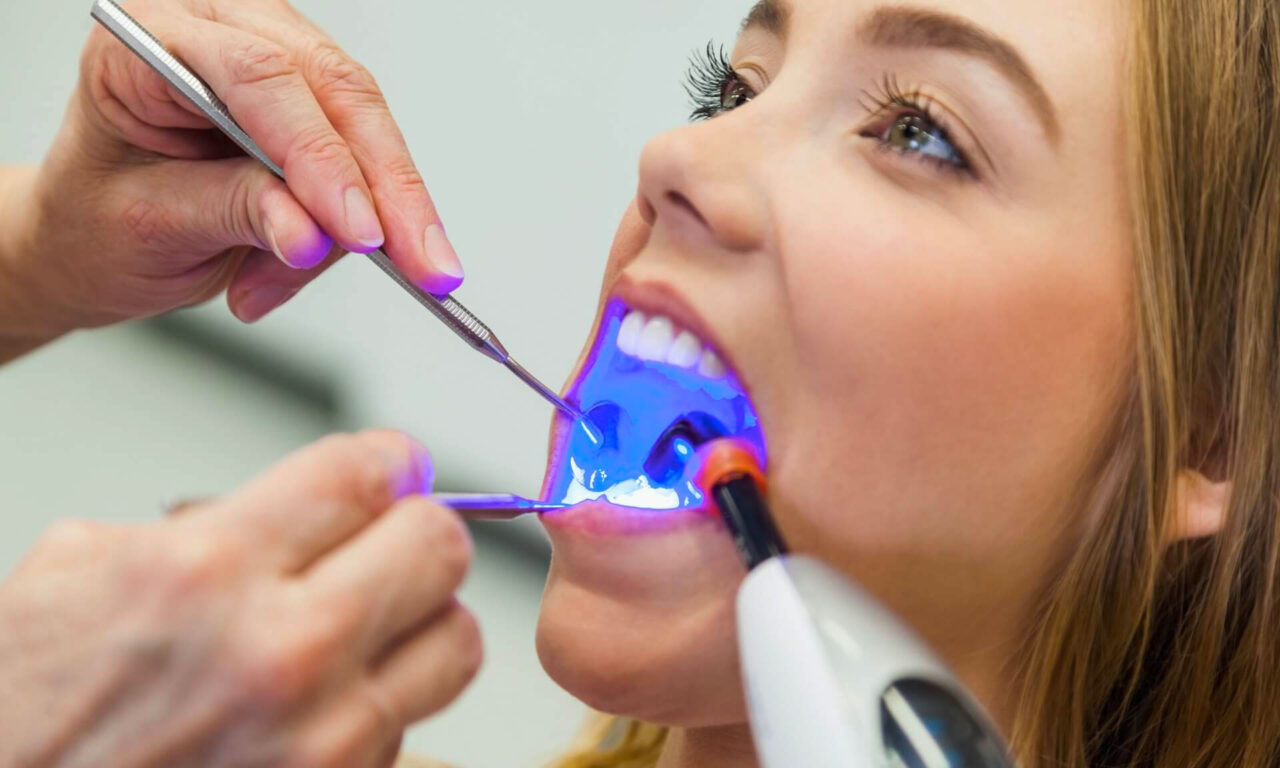
Dental Fillings in Surrey, BC
A dental filling repairs a tooth damaged by a cavity: the dentist removes the decayed part of the tooth and fills the space with a restorative material, so the tooth works normally again and stays protected. At The Dental Group at Central City, we use tooth-colored composite fillings for suitable cavities and damaged teeth, at our office inside Central City Shopping Centre in Surrey, BC. New patients and walk-ins are welcome.
Quick facts
| What a filling treats | Cavities, a damaged or worn old filling, and some small chips or areas of damage |
| Material | Tooth-colored composite, shaded to blend with your tooth. |
| Anesthetic | Local anesthetic is used when needed for comfort |
| Visit length | Depends on the size and location of the cavity and how many teeth are treated. |
| Cost | Depends on the size and location of the cavity, the material and the number of teeth. |
| Hours | Mon–Tue 9 AM–5 PM · Wed–Thu 9 AM–8 PM · Fri 9 AM–6 PM · Sat 9 AM–5 PM · Sun 11 AM–4 PM |
| Location | Unit 1117, 10153 King George Blvd., Surrey, BC V3T 2W1, inside Central City Shopping Centre, next to the Passport Office |
| Phone | (604) 585-2345 |
Book a new patient exam · Toothache? Book urgent care · Call (604) 585-2345
What causes cavities?
Cavities form when acids made by bacteria in plaque gradually damage tooth enamel and the layers beneath it. Risk goes up with frequent sugary foods and drinks, frequent snacking, poor brushing and flossing, plaque buildup, dry mouth, certain medications, existing dental problems and limited access to regular dental care. Cavities can form between teeth and in places that are hard to see at home.
Do cavities always hurt?
No. Early decay often causes no pain, and a dentist may find it during an exam or on an X-ray. As decay gets deeper you may notice:
- Sensitivity to hot, cold or sweet things
- Toothache or pain when biting
- Food catching around a tooth
- A dark spot, hole or rough area on the tooth
- Swelling or discomfort in more advanced cases
Because cavities can be silent, regular exams and cleanings matter.
Tooth-colored composite fillings
Composite fillings are shaded to match your tooth, so they’re less noticeable than metal-colored materials, which is especially helpful on visible teeth. The best material depends on the cavity’s location and size, how much natural tooth remains, bite forces, appearance and your overall oral health. Your dentist will explain what’s right for your tooth.
What happens during a filling
- Exam. Your dentist examines the tooth. X-rays or other imaging may be recommended to see whether decay is present, how deep it goes, and whether a filling is the right treatment.
- Local anesthetic. If needed, the area is numbed so you’re comfortable. Your dentist explains what to expect first.
- Removing the decay. Only the decayed or damaged part of the tooth is removed. How much depends on the cavity.
- Preparing the tooth. The tooth is cleaned and prepared for the filling material.
- Placing the filling. The material is placed and shaped to restore the tooth’s natural contour.
- Checking your bite. We make sure the filled tooth fits your bite, and adjust if needed.
Does it hurt? With local anesthetic you may feel pressure or movement, but should not feel significant pain while the dentist works. If you’re anxious, tell us before treatment so we can talk through it.
Eating after a filling: Your dentist will tell you when it’s safe. If you had anesthetic, it’s usually best to wait until the numbness wears off so you don’t bite your cheek, lip or tongue.
Sensitivity after a filling
Some temporary sensitivity to cold, hot, sweet or pressure is common and often improves as the tooth settles. If pain is lasting, getting worse or severe, or your bite feels high, see your dentist, because the tooth may need more treatment or an adjustment.
Filling, crown or root canal?
| Filling | Crown | Root canal | |
|---|---|---|---|
| Used when | Small to moderate decay or damage and enough healthy tooth remains | A tooth has extensive decay, a very large filling, a significant crack, heavy wear or has had a root canal | The inner pulp is inflamed or infected |
| Typical signs | Sensitivity, a visible cavity, sometimes no symptoms | Weakened tooth with major structural loss | Severe or lasting toothache, long-lasting sensitivity to hot or cold, pain when biting, swelling or an abscess |
If decay has reached the inner part of the tooth, a filling alone may not be enough. Your dentist decides after examining the tooth and the amount of healthy structure left. Treating a cavity early can reduce the risk of it going deeper, but a filling can’t guarantee you’ll never need a root canal.
What if a cavity isn’t treated?
A cavity doesn’t repair itself once real tooth structure has been lost. Left untreated, it can lead to more sensitivity, toothache, a larger cavity, a weakened or cracked tooth, infection or abscess, the need for a root canal or crown, and in severe cases extraction. What treatment is needed depends on how advanced the decay is when it’s found.
If a filling falls out or breaks
Fillings can loosen, crack or fall out because of normal wear, biting forces, grinding, new decay or a fractured tooth.
- Keep the area clean.
- Avoid chewing hard foods on that side, and avoid very hot or cold foods if the tooth is sensitive.
- Don’t attempt a permanent repair yourself.
- Call us at (604) 585-2345. We’ll check whether the filling can be replaced or whether the tooth now needs a different treatment.
If you have severe pain, swelling, an injury or a badly broken tooth, see dental emergencies. For facial swelling with fever, or trouble breathing or swallowing, go to the nearest hospital emergency department or call 911.
Fillings for cracked or chipped teeth
A small chip or limited damage can sometimes be restored with a filling or bonding. A tooth with a significant crack or weakness may need a crown or other treatment. If a cracked tooth causes pain, sensitivity, swelling or trouble chewing, get it checked promptly.
Fillings for children
Children get cavities too. Baby teeth help with chewing, speech and keeping space for permanent teeth, so cavities should be treated appropriately. Encourage brushing twice a day, flossing when appropriate, limiting frequent sugary snacks, drinking water and regular exams. See children’s dentistry.
Protecting your fillings and preventing new cavities
A filling treats an existing cavity but doesn’t make the tooth immune to new decay.
- Brush twice a day and clean between your teeth daily
- Limit frequent sugary snacks and drinks, and drink water
- Keep regular exams and hygiene visits
- Avoid chewing very hard objects or using your teeth to open packages
- If you grind or clench, ask about a night guard
- Report sensitivity or discomfort that doesn’t go away
Related services
Exam & cleaning · Hygiene care · Dental crowns · Root canal treatment · Children’s dentistry · Night guards · Dental emergencies · All dental services
Frequently asked questions
How much do dental fillings cost in Surrey, BC?
Cost depends on the size and location of the cavity, the material and the number of teeth. An exam is needed for an estimate.
Are white fillings better than metal fillings?
Tooth-colored composite fillings look natural and suit many cavities. The best material depends on the location and size of the filling, bite forces and other clinical factors. Your dentist will advise you.
How long does a filling last?
It varies with the material, the size and location of the filling, your oral hygiene, bite forces and grinding. Regular exams let your dentist watch for wear or damage.
Can I eat after getting a filling?
Your dentist will tell you when. If you had anesthetic, it’s usually best to wait until the numbness wears off.
Why does my tooth hurt after a filling?
Some temporary sensitivity is common. See your dentist if pain is persistent, severe or getting worse.
Can a filling fix a broken tooth?
It can repair certain small chips or areas of damage. A larger break may need a crown or other treatment, depending on how much tooth remains.
Can cavities be treated without a filling?
Very early demineralization may sometimes be managed with preventive measures. Once tooth structure has been lost, a filling or other restoration is usually needed. Your dentist will tell you which stage you’re at.
Can I get more than one filling in one visit?
Often yes, depending on the number, location and complexity of the cavities. Your dentist will recommend a schedule.
What happens if my filling falls out?
Keep the area clean, avoid chewing hard foods on that side, don’t try a permanent repair, and call us to arrange an evaluation.
Are you accepting new patients?
Yes. We welcome new patients and accept walk-ins during office hours. You can also book online or call (604) 585-2345.
Book a filling or cavity check in Surrey
A cavity is easier to treat when it’s found early. If you have sensitivity, a visible cavity or a damaged filling, an exam is the first step.
Book online · Call (604) 585-2345
Unit 1117, 10153 King George Blvd., Surrey, BC V3T 2W1, inside Central City Shopping Centre, next to the Passport Office.