
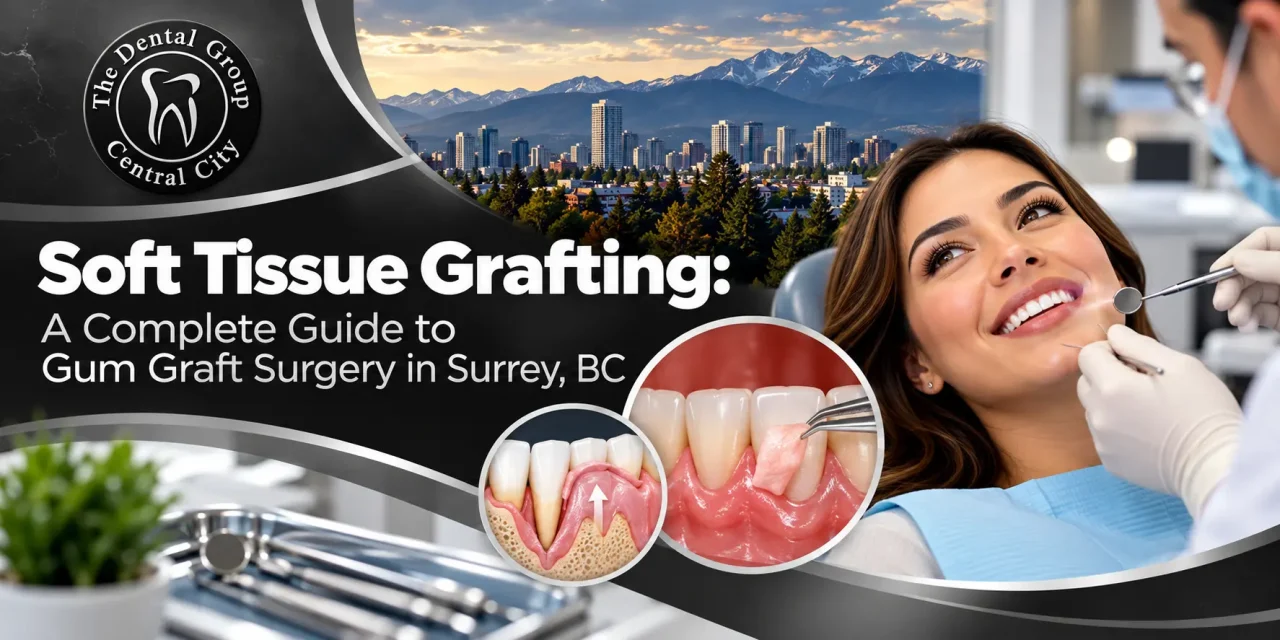
Healthy gums are essential for protecting your teeth, maintaining oral health, and supporting a confident smile. However, gum recession can gradually expose the roots of your teeth, making them look longer and potentially increasing sensitivity and the risk of root decay. If you have noticed your gums pulling away from your teeth, soft tissue grafting may be a treatment option worth discussing with your dentist.
For patients researching soft tissue grafting, understanding why gum recession happens, how a gum graft works, and what recovery involves can help make the decision less overwhelming.
Soft tissue grafting is a dental procedure that adds or restores gum tissue in areas where it has become thin, receded, or insufficient. Depending on your needs, the procedure may help protect exposed tooth roots, improve the gum line, and create a more stable environment for long-term oral health.
At The Dental Group at Central City in Surrey, BC, patients can learn about treatment options for receding gums and discuss whether a soft tissue graft may be appropriate for their individual circumstances.
In this guide, we explain the causes of gum recession, the different types of gum grafts, what happens during treatment, recovery expectations, and how to care for your gums afterward.
What Is Soft Tissue Grafting?
Soft tissue grafting, also called gum grafting or gingival grafting, is a dental procedure that adds tissue to an area where the gums have receded or where additional gum tissue may be beneficial.
Healthy gum tissue covers and protects the roots of your teeth. Unlike the visible crowns of your teeth, tooth roots do not have the same protective enamel covering. When recession exposes these surfaces, they can become more vulnerable to sensitivity, root decay, and other complications.
A soft tissue graft involves placing suitable tissue in the affected area. Depending on the technique and clinical circumstances, the tissue may come from the roof of your mouth or another appropriate source.
The treatment plan depends on factors such as the amount of recession, the thickness of the existing gum tissue, the condition of the surrounding teeth, and your overall periodontal health.
Soft tissue grafting may be recommended to:
- Cover exposed tooth roots in suitable cases
- Increase the thickness of thin gum tissue
- Help protect vulnerable areas from further recession
- Reduce sensitivity associated with exposed roots
- Improve the appearance of an uneven gum line
- Create a more suitable gum-tissue environment around selected teeth or dental restorations
Not every case of gum recession requires surgery. Your dentist must first determine the cause, assess the severity, and discuss whether monitoring, preventive care, or a surgical procedure is the most appropriate approach.
Learn more about soft tissue grafting at The Dental Group at Central City to explore the treatment offered at the practice.
What Causes Gum Recession?
Gum recession occurs when the gum tissue moves away from its normal position around a tooth, exposing more of the tooth or its root surface.
Recession can develop gradually, and you may not notice it until your teeth appear longer or become sensitive. Several factors can contribute to the problem.
1. Gum Disease
Periodontal disease is one possible cause of gum recession. It develops when bacteria and the body’s inflammatory response damage the tissues supporting the teeth.
As periodontal disease progresses, it can affect the gums, periodontal ligament, and supporting bone. In advanced cases, teeth may become loose or be lost.
Treating active gum disease is important before considering elective gum grafting. A graft does not replace comprehensive periodontal treatment, and the underlying cause of inflammation must be managed to help protect the results.
Routine examinations and professional cleanings can help your dental team monitor your gum health. If you have concerns about your gums, consider scheduling an appointment through the practice’s dental services page.
2. Brushing Too Aggressively
Brushing is essential for oral health, but excessive pressure or an abrasive brushing technique can contribute to gum irritation and recession in some patients.
Using a hard-bristled toothbrush or scrubbing vigorously near the gum line may traumatize delicate tissues over time.
To help protect your gums, use a soft-bristled toothbrush and gentle circular or short brushing movements. An electric toothbrush with a pressure sensor may be helpful if you tend to brush too forcefully.
Your dental hygienist can demonstrate a brushing technique suited to your teeth and gum condition.
3. Thin or Naturally Delicate Gum Tissue
Some people naturally have thinner gum tissue or anatomical features that make certain areas more susceptible to recession.
Even with consistent oral hygiene, thin tissue may be more vulnerable to trauma or changes around the teeth.
In selected cases, a dentist may recommend grafting to increase tissue thickness or improve protection around an affected area. Whether treatment is necessary depends on the examination findings and your individual risk factors.
4. Teeth Grinding and Clenching
Grinding or clenching can place substantial forces on teeth and their supporting structures. These habits may contribute to tooth wear, sensitivity, and other dental problems.
They are not the sole cause of every case of gum recession, but they may be relevant when your dentist evaluates your oral health.
If you grind your teeth, your dentist may discuss ways to manage the forces involved, including whether a custom night guard is appropriate.
5. Tooth Position and Anatomical Factors
Teeth positioned outside the normal dental arch may have less protective gum tissue over certain surfaces. Orthodontic movement and other anatomical factors can also affect the gum line.
A comprehensive examination helps determine whether the recession is related to tooth position, tissue thickness, brushing habits, periodontal disease, or several contributing factors.
Identifying these factors is important because successful management involves more than treating the visible recession.
Signs You May Need a Gum Graft
Gum recession can occur without significant pain, so visible changes are often the first indication that something has changed.
Consider arranging a dental examination if you notice any of the following:
- Your teeth appear longer than they used to.
- The gum line looks uneven around neighboring teeth.
- You can see yellowish or darker areas near the base of a tooth.
- Your teeth feel sensitive to cold, heat, or sweet foods.
- You notice a notch or indentation near the gum line.
- Food collects more easily around certain teeth.
- Your gums appear thinner or seem to be moving away from the teeth.
These signs do not automatically mean you need soft tissue grafting. For example, sensitivity can result from cavities, enamel wear, cracks, or other dental conditions.
A dentist can examine the affected area, measure gum recession, assess periodontal health, and determine the most appropriate treatment.
Seek prompt dental care if you also experience significant swelling, pus, fever, or rapidly worsening pain. These symptoms may indicate an infection or another problem that needs timely attention.
Types of Soft Tissue Grafting Procedures
There are several approaches to gum grafting. The most suitable technique depends on the area being treated, the amount and quality of available tissue, and the treatment goals.
1. Connective Tissue Graft
A connective tissue graft is commonly used to treat selected cases of gum recession.
During this procedure, the dentist accesses connective tissue beneath the surface of the palate, or roof of the mouth. The tissue is then placed over or around the affected area and secured in position.
This technique may be considered when the goal is to cover exposed roots and improve the thickness of the gum tissue.
The expected degree of root coverage varies. It depends on the severity of recession, the condition of the supporting tissues, and individual healing factors.
2. Free Gingival Graft
A free gingival graft involves taking a small amount of tissue from the roof of the mouth and placing it directly in the treatment area.
This approach is often considered when increasing the amount or thickness of keratinized gum tissue is an important objective.
Keratinized gum tissue is the firmer tissue that helps protect areas around the teeth. Increasing it may be beneficial in selected situations, although the need for grafting must be determined individually.
The technique, tissue source, and expected result should be discussed with your dentist before treatment.
3. Pedicle Graft
A pedicle graft uses gum tissue from an adjacent area near the tooth being treated.
Instead of completely separating the tissue from its original blood supply, the dentist moves a section of nearby gum tissue toward the recession area while maintaining its attachment.
This approach may be suitable when sufficient healthy gum tissue is available next to the affected tooth.
Not every patient has the anatomy needed for a pedicle graft, so the dentist will assess whether this technique is appropriate.
4. Graft Materials From Other Sources
In some situations, grafting material from a tissue bank or other approved source may be considered instead of taking tissue from the patient’s palate.
The appropriate material depends on the clinical objective, available techniques, and the dentist’s assessment.
Your dentist can explain the advantages, limitations, healing considerations, and expected outcomes of the options suitable for your case.
What Happens During Soft Tissue Grafting?
Understanding the treatment process can help you feel more prepared for your appointment. Although the exact steps vary, a gum graft generally involves the following stages.
Step 1: Consultation and Examination
The first step is an evaluation of your gums, teeth, and supporting structures.
Your dentist will ask about your symptoms, oral hygiene routine, medical history, medications, and any previous periodontal treatment.
The examination may include measuring gum recession, checking for inflammation, evaluating tooth mobility, and assessing the surrounding tissues. Dental X-rays may be recommended when needed to evaluate the supporting bone or investigate other concerns.
This information helps determine whether a graft is appropriate and which technique may offer the best result.
Step 2: Treatment Planning
Once the assessment is complete, your dentist will explain the recommended approach.
The plan may include treating active gum disease, improving home-care techniques, managing contributing habits, or addressing other dental conditions before surgery.
You should also have the opportunity to discuss the expected benefits, limitations, recovery period, possible complications, and cost of treatment.
Ask questions about the source of the graft tissue, the expected amount of root coverage, and how the treated area will be monitored.
Step 3: Preparing the Treatment Area
Local anesthetic is generally used to numb the treatment area and help keep the procedure comfortable.
The dentist carefully prepares the recipient site where the tissue will be placed. If tissue is being taken from the palate, that area is also prepared.
The details depend on the graft technique and the location being treated.
Step 4: Placing and Securing the Graft
The selected tissue is positioned in the treatment area and secured with sutures.
The dentist aims to achieve appropriate tissue placement and stability while supporting the healing process.
The procedure’s duration varies according to the number of teeth involved, the technique used, and the complexity of the case.
Step 5: Post-Procedure Instructions
Before you leave, your dental team will explain how to care for the treated area.
Instructions may cover diet, oral hygiene, prescribed or recommended medication, physical activity, and when to return for follow-up.
Following these instructions carefully is important because movement or trauma to the graft can interfere with healing.
Is Soft Tissue Grafting Painful?
Soft tissue grafting is generally performed with local anesthetic, so the treatment area should be numb during the procedure.
After the anesthetic wears off, you may experience soreness, swelling, tenderness, or discomfort. The level of discomfort varies depending on the surgical technique, the number of sites treated, and whether tissue was taken from the roof of your mouth.
Your dentist will provide instructions for managing discomfort and explain which medications are appropriate for you.
Do not take medication that conflicts with your medical history or current prescriptions without professional guidance.
If you experience severe or increasing pain, uncontrolled bleeding, fever, significant swelling, or other unexpected symptoms, contact your dental office promptly.
Recovery After Soft Tissue Grafting
Recovery is an important part of treatment. Although the initial discomfort often improves over several days, the grafted tissue takes longer to mature and stabilize.
Your dentist will provide a recovery plan based on the procedure performed.
The First 24–48 Hours
During the first couple of days, focus on rest and protecting the surgical area.
Your dentist may recommend soft, cool or lukewarm foods and advise you to avoid strenuous exercise for a period of time.
Do not pull your lip or cheek to inspect the graft, touch the area with your fingers, or disturb the sutures with your tongue.
If bleeding occurs, follow the instructions provided by your dental team and contact the office if it does not settle as expected.
The First Week
Tenderness and swelling may gradually improve during the first week, although healing differs between individuals.
Choose foods that require minimal chewing and avoid hard, crunchy, sharp, or very hot foods that could irritate the surgical area.
Follow the specific instructions about brushing and cleaning around the graft. Your dentist may temporarily ask you to avoid brushing directly over the surgical site.
Do not use mouth rinses or home remedies unless they have been recommended for your situation.
The Following Weeks
The grafted area continues to heal and adapt during the following weeks.
Depending on the technique used, your dentist may schedule a follow-up appointment to assess healing and remove sutures if necessary.
Avoid judging the final cosmetic result too early. Gum tissue may change in appearance as it heals and matures.
Your dentist can advise when normal brushing and other activities can be resumed and whether any further treatment or monitoring is needed.
How to Care for Your Gums After a Gum Graft
Good home care helps protect your gums and supports the long-term health of your teeth. After grafting, your dental team will explain how to maintain the treated area without disrupting healing.
Maintain Gentle Oral Hygiene
Brush twice daily using a soft-bristled toothbrush and fluoride toothpaste, following the instructions provided for the surgical site.
Once your dentist confirms it is appropriate, clean between your teeth daily with floss or another recommended interdental cleaning tool.
Attend Follow-Up Appointments
Follow-up visits allow your dentist to evaluate healing, check the graft, and identify any concerns that may require attention.
Even when the area looks healthy, continuing routine dental examinations is important.
Avoid Tobacco and Nicotine
Smoking can impair healing and is associated with poorer outcomes for many oral surgical procedures.
Ask your dentist for guidance on avoiding tobacco and nicotine before and after treatment. Follow the individualized instructions you receive.
Address Contributing Habits
If aggressive brushing contributed to the problem, changing your technique may help reduce additional trauma.
If grinding or clenching is a concern, discuss appropriate management with your dentist.
A graft treats the affected tissue, but it does not automatically eliminate the factors that contributed to recession in the first place.
Maintain Regular Professional Care
Routine examinations and professional cleanings help your dental team monitor gum health and remove plaque and tartar.
The frequency of visits should be based on your periodontal condition and individual risk factors.
Explore the practice’s full range of dental services to learn about the preventive, restorative, and surgical care available at The Dental Group at Central City.
What Are the Benefits of Soft Tissue Grafting?
When recommended for the right reasons, soft tissue grafting can offer several potential benefits.
Protection for exposed roots: Root coverage may reduce exposure of vulnerable tooth surfaces in suitable cases. This can help address sensitivity and reduce the risk of root decay when combined with good oral hygiene.
Improved gum-tissue thickness: Certain grafting procedures increase the thickness or amount of gum tissue around selected teeth, which may provide better protection in areas considered at risk.
Improved appearance: Recession can make teeth look longer and create an uneven gum line. Grafting may improve the appearance of the affected area, although complete root coverage cannot be guaranteed.
Support for long-term oral health: Grafting can be part of a broader plan to manage gum recession and protect the surrounding tissues.
The expected benefits depend on your dental anatomy, the severity of recession, the surgical technique, and your oral health habits. Your dentist should explain what the procedure is likely to accomplish in your specific case.
Are There Risks or Limitations?
Like any surgical procedure, soft tissue grafting has potential risks and limitations.
Possible complications may include:
- Postoperative pain or swelling
- Bleeding or infection
- Delayed healing
- Partial graft loss or incomplete integration
- Incomplete root coverage
- Changes in gum appearance or tissue contour
- Temporary or persistent sensitivity
- Discomfort at the tissue donor site when tissue is taken from the palate
Some patients may need additional treatment if the initial result does not meet the clinical objectives.
The procedure also cannot reverse every effect of periodontal disease or restore lost supporting bone simply by adding gum tissue.
Your dentist will assess whether the expected benefits outweigh the risks and explain alternative approaches when appropriate.
How Much Does Soft Tissue Grafting Cost in Surrey, BC?
The cost of soft tissue grafting varies according to the complexity of the procedure and the treatment required.
Factors that may affect the total cost include:
- The number of teeth or areas being treated
- The type of grafting procedure
- The source of the graft tissue
- The severity of gum recession
- Whether periodontal treatment is needed beforehand
- The complexity of the surgery
- Follow-up and postoperative care requirements
Insurance coverage also varies according to the patient’s dental plan and the clinical circumstances.
Before proceeding, request a written treatment estimate and ask what is included in the fee. You may also want to confirm whether diagnostic procedures, follow-up visits, or additional periodontal treatment are billed separately.
A dental examination is the best way to determine which procedure is appropriate and what it may cost in your situation.
Why Consider The Dental Group at Central City for Soft Tissue Grafting?
Choosing treatment for gum recession begins with understanding the condition of your gums and the factors affecting your oral health.
The Dental Group at Central City offers soft tissue grafting for patients who need treatment for receding gums. The dental team can evaluate the affected area, discuss appropriate options, and explain the expected benefits and limitations of treatment.
The practice also provides a range of general, preventive, restorative, and surgical dental services. This allows patients to discuss gum health alongside other aspects of their dental care when needed.
The office is located inside Central City Shopping Centre in Surrey, BC, making it a convenient option for patients seeking dental care in the area.
Practice information:
The Dental Group at Central City
1117-10153 King George Blvd.
Surrey, BC V3T 2W1, Canada
Phone: (604) 585-2345
For more information, visit the dedicated Soft Tissue Graft service page or use the contact page to inquire about an appointment.
Frequently Asked Questions About Soft Tissue Grafting
What is soft tissue grafting in dentistry?
Soft tissue grafting is a procedure that adds gum tissue to an area where the gums have receded or where additional tissue is needed. It may help cover exposed roots, increase gum thickness, or improve the appearance of the gum line.
Why would I need a gum graft?
A dentist may recommend gum grafting if you have exposed tooth roots, significant gum recession, thin gum tissue, or an area that needs additional tissue protection. Whether surgery is necessary depends on the cause and severity of the problem.
Does a gum graft cover exposed tooth roots?
Gum grafting can cover exposed roots in appropriate cases. The amount of coverage varies based on the anatomy, severity of recession, and treatment technique. Complete coverage is not guaranteed.
How long does soft tissue grafting take to heal?
Initial discomfort often improves over several days, but the tissue needs several weeks or longer to heal and mature. The timeline depends on the procedure and the patient’s individual healing response. Follow your dentist’s instructions and attend recommended follow-up visits.
Can gum recession grow back naturally?
Receded gum tissue generally does not grow back on its own to its previous position. However, treating the cause of recession and improving oral hygiene can help prevent further damage. In suitable cases, a graft may restore some of the lost gum coverage.
Is soft tissue grafting the same as bone grafting?
No. Soft tissue grafting adds gum tissue, while bone grafting involves material intended to support or augment bone. The procedures address different structures and are used for different clinical reasons.
Can brushing too hard cause gum recession?
Aggressive brushing may contribute to gum recession, particularly in areas with thin tissue or other risk factors. Using a soft-bristled toothbrush and gentle technique can help reduce trauma to the gums.
How do I know if I need soft tissue grafting in Surrey?
If you notice receding gums, exposed roots, sensitivity, or changes in your gum line, arrange a dental examination. A dentist can determine the cause and discuss whether monitoring, preventive treatment, or soft tissue grafting is appropriate.
Protect Your Gum Health With the Right Treatment Plan
Gum recession can affect comfort, appearance, and the protection of your teeth. Soft tissue grafting may help address these concerns in suitable cases, but successful care begins with identifying the cause of recession and understanding your individual needs.
If you have noticed exposed tooth roots, sensitivity, or changes in your gum line, consider arranging an examination to discuss your options.
The Dental Group at Central City provides soft tissue grafting services in Surrey, BC, and can help you understand the treatment process, expected recovery, and ongoing care requirements.
Take the next step toward healthier gums. Visit the Soft Tissue Graft service page or call (604) 585-2345 to inquire about scheduling an appointment.