
Dentures in Surrey, BC
Missing teeth can affect much more than the appearance of your smile. They can make eating and speaking more difficult, change the way your bite feels, and affect your confidence in everyday situations. Dentures in Surrey, BC can provide a practical tooth-replacement solution for patients who are missing several teeth or all of their natural teeth.
At The Dental Group at Central City, we provide personalized denture solutions designed around your oral health, comfort, appearance, and everyday needs. During your consultation, our dental team will evaluate your remaining teeth, gums, bite, and overall oral health to help determine which type of denture may be appropriate for you.
Our dental office is conveniently located inside Central City Shopping Centre at 1117-10153 King George Blvd., Surrey, BC.
What Are Dentures?
Dentures are removable dental appliances designed to replace missing teeth and surrounding oral structures.
Depending on how many teeth you are missing, dentures can replace some or all of the teeth in the upper or lower arch.
Dentures may help restore:
- Chewing function
- Speech
- Smile appearance
- Facial support
- Confidence when eating and speaking
- The appearance of a complete smile
Modern dentures can be designed to look natural while providing a comfortable and functional fit.
The appropriate denture solution depends on the number of missing teeth, the condition of your remaining teeth and gums, your bite, bone structure, and your overall treatment goals.
Who May Need Dentures?
Dentures may be considered for patients who have lost multiple teeth or all of their natural teeth.
You may want to discuss dentures with a dentist if:
- You are missing several teeth
- You have lost most of your natural teeth
- You have difficulty chewing because of missing teeth
- Your existing dentures no longer fit comfortably
- Your remaining teeth are severely damaged or compromised
- You want to replace multiple missing teeth
- You are looking for a removable tooth-replacement option
- You are considering alternatives to individual dental implants
Dentures are not limited to older adults. Tooth loss can occur at different stages of life because of tooth decay, gum disease, trauma, dental conditions, or other circumstances.
Types of Dentures
The type of denture you need depends primarily on how many teeth are missing and the condition of your remaining teeth.
Complete Dentures
Complete dentures, also called full dentures, are designed to replace an entire arch of missing teeth.
They may be used when all of the natural teeth in the upper or lower arch are missing or need to be removed.
Complete dentures can help restore the appearance and function of a full smile.
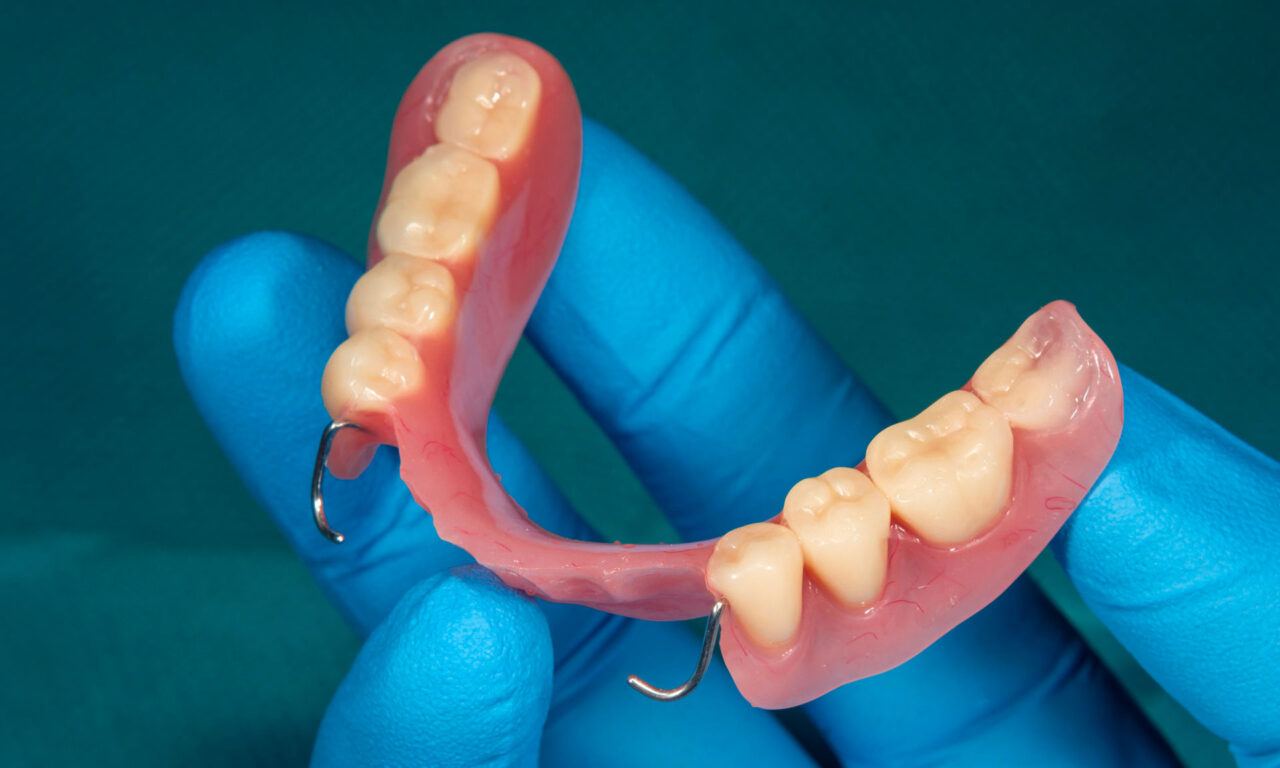
Partial Dentures
Partial dentures are designed for patients who still have some natural teeth.
A partial denture replaces missing teeth while using the remaining teeth and oral structures for support.
Partial dentures can be an option when several teeth are missing but some healthy natural teeth remain.
Implant-Supported Dentures
Some patients may be candidates for implant-supported dentures.
Instead of relying entirely on the gums for support, implant-supported dentures use dental implants to provide additional retention and stability.
If you are interested in implant-based tooth replacement, learn more about our Dental Implants in Surrey.
Your dentist can determine whether implant-supported treatment is appropriate based on your oral health, bone support, and treatment goals.
Dentures vs. Dental Bridges
Patients who are missing teeth often ask whether they should choose dentures or a dental bridge.
These treatments work differently.
A dental bridge is generally used to replace one or several missing teeth and is supported by adjacent teeth or dental implants.
Dentures are removable appliances that can replace multiple missing teeth or an entire arch.
A dental bridge may be considered when:
- A smaller number of teeth are missing
- Suitable supporting teeth are available
- You prefer a fixed restoration
Dentures may be considered when:
- Multiple teeth are missing
- Many or all teeth in an arch are missing
- A removable solution is appropriate
- A bridge is not practical for the number or location of missing teeth
Learn more about Dental Bridges in Surrey to compare another tooth-replacement option.
Dentures vs. Dental Implants
Dental implants and dentures can both be used to replace missing teeth, but they are different treatment approaches.
Dental implants are placed into the jawbone and can support individual crowns, bridges, or implant-supported dentures.
Dentures are removable appliances that rest on the gums or, in some cases, receive additional support from dental implants.
Factors that may influence the choice include:
- Number of missing teeth
- Bone availability
- Gum health
- Condition of remaining teeth
- Overall oral health
- Desired stability
- Treatment preferences
- Long-term maintenance
There is no single tooth-replacement solution that is appropriate for every patient. A dental examination allows your dentist to discuss the available options based on your individual situation.
Benefits of Dentures
Replace Multiple Missing Teeth
One denture can replace several missing teeth, making dentures a practical option for patients with extensive tooth loss.
Restore Chewing Function
Missing teeth can make it difficult to chew certain foods. Dentures can help restore useful chewing function and make everyday eating more manageable.
Improve Speech
Tooth loss can affect the way certain sounds are produced. Replacing missing teeth may help improve speech and pronunciation.
Support Facial Appearance
Natural teeth provide support to the lips and cheeks. Replacing missing teeth can help restore some of the structure associated with a complete smile.
Restore Smile Confidence
Missing teeth can affect how comfortable you feel when smiling or speaking with others. A well-designed denture can help restore a more complete smile.
The Denture Fitting Process
Getting dentures usually involves several steps to ensure that the restoration fits comfortably and functions appropriately.
1. Dental Examination
Your dentist first evaluates your oral health.
This may include examining:
- Remaining teeth
- Gums
- Jaw structure
- Bite
- Existing restorations
- Areas of tooth loss
- Overall oral health
If remaining teeth need treatment before dentures are made, your dentist can discuss the appropriate sequence.
For ongoing oral health monitoring, regular Dental Exams and Cleanings are also important.
2. Treatment Planning
Your dentist discusses your tooth-replacement options and determines which type of denture may be suitable.
Treatment planning may consider whether you need:
- Complete dentures
- Partial dentures
- Implant-supported dentures
- Tooth extractions before denture treatment
- Additional restorative treatment
3. Impressions or Digital Information
Accurate information about the shape of your mouth is needed to design a well-fitting denture.
Depending on the treatment approach, traditional impressions or digital techniques may be used.
If you are interested in modern impression techniques, you can learn more about Impressionless Dentistry.
4. Denture Design
The denture is designed to complement your facial features and natural appearance.
Factors such as tooth shape, size, color, position, and overall smile appearance can be considered.
5. Fitting and Adjustments
Once the denture is ready, your dentist evaluates the fit, bite, comfort, and appearance.
Adjustments may be needed to improve comfort as you become accustomed to your new denture.
What Is It Like to Wear New Dentures?
It can take time to become comfortable with a new denture.
During the adjustment period, you may notice:
- Increased awareness of the appliance
- Mild gum sensitivity
- Changes in speech
- Changes in chewing
- Increased saliva production
- Difficulty with certain foods
These issues often improve as you become accustomed to wearing the denture.
Your dentist can provide specific instructions about wearing, removing, cleaning, and caring for your dentures.
If a denture continues to cause significant discomfort, rubbing, looseness, or difficulty chewing, schedule an appointment so the fit can be evaluated.
How to Care for Your Dentures
Proper denture care is important for maintaining cleanliness, comfort, and oral health.
General denture care includes:
- Clean your dentures regularly
- Follow your dentist’s cleaning instructions
- Clean your gums and tongue
- Remove dentures when recommended
- Handle dentures carefully
- Store them appropriately when they are not being worn
- Keep your remaining natural teeth clean
- Attend regular dental examinations
If you still have natural teeth, maintaining them is particularly important.
Professional Hygiene Care in Surrey can help maintain the health of your remaining teeth and gums.
Can Dentures Replace All Missing Teeth?
Yes. Complete dentures are specifically designed to replace all of the teeth in an upper or lower dental arch.
However, the appropriate treatment depends on your individual oral health.
Some patients may benefit from complete dentures, while others may be candidates for implant-supported dentures or another tooth-replacement approach.
Your dentist can evaluate your situation and explain the available options.
Can Dentures Improve Chewing?
Dentures are designed to restore useful chewing function after tooth loss.
However, chewing with dentures can feel different from chewing with natural teeth. Patients often need some time to adapt to the new appliance.
Starting with softer foods and gradually introducing different textures may help during the adjustment period.
Your dental team can provide personalized guidance based on your denture and oral health.
What If My Dentures Feel Loose?
Loose dentures can make eating and speaking uncomfortable.
A denture may feel loose because of changes in the gums and underlying bone over time, changes in the fit, normal wear, or other oral health factors.
If your dentures no longer fit properly, schedule an examination rather than relying on temporary solutions.
Your dentist can evaluate whether the denture needs an adjustment, repair, replacement, or another treatment approach.
How Long Do Dentures Last?
The lifespan of dentures varies between patients.
Factors that can affect denture longevity include:
- Daily use
- Proper cleaning
- Changes in your mouth over time
- Changes in your gums and jawbone
- Denture wear
- Accidental damage
- Changes in your bite
- Overall oral health
Even if your dentures still appear usable, regular dental visits are important because your mouth can change over time.
Your dentist can determine whether your existing dentures continue to fit properly and function effectively.
Dentures After Tooth Extraction
Some patients need teeth extracted before receiving complete or partial dentures.
If teeth are severely damaged by decay, infection, trauma, or other dental problems, extraction may be recommended when the tooth cannot be predictably restored.
Learn more about Dental Extractions in Surrey.
The timing of denture treatment after an extraction depends on the individual situation and the type of denture being planned.
Your dentist will explain the expected treatment sequence during your consultation.
What If My Remaining Teeth Are Damaged?
If you still have natural teeth, your dentist may recommend restoring them before completing a partial denture treatment plan.
Depending on the condition of a tooth, treatment may include a filling or dental crown.
Learn more about:
Treating existing dental problems can help create a healthier foundation for your overall tooth-replacement plan.
Dentures and Oral Health
Dentures replace missing teeth, but they do not eliminate the need for ongoing dental care.
If you still have natural teeth, those teeth remain susceptible to:
- Cavities
- Gum disease
- Tooth wear
- Plaque buildup
- Infection
Regular dental examinations and professional cleanings remain important.
Your dental team can also monitor your gums, oral tissues, bite, and the condition of your dentures.
Dentures and Gum Health
Healthy gums provide an important foundation for removable dentures.
Poor oral hygiene can contribute to irritation, inflammation, plaque accumulation, and other oral health problems.
Cleaning your dentures and maintaining good oral hygiene can help support healthier gums.
If you experience persistent gum irritation, pain, sores, or swelling while wearing dentures, speak with your dentist.
Dentures in Surrey, BC
If you are looking for dentures in Surrey, BC, The Dental Group at Central City offers personalized tooth-replacement care for patients with partial or complete tooth loss.
Our office is conveniently located at:
1117-10153 King George Blvd.
Surrey, BC V3T 2W1
We are located inside Central City Shopping Centre next to the Passport Office.
During your consultation, our dental team can evaluate your oral health and discuss whether complete dentures, partial dentures, implant-supported dentures, dental bridges, dental implants, or another treatment may be appropriate.
Our goal is to create a treatment plan that considers both your oral health and your everyday needs.
Frequently Asked Questions About Dentures
How much do dentures cost in Surrey, BC?
The cost of dentures varies depending on the type of denture, number of teeth being replaced, materials, design, and any additional dental treatment that may be required.
A dental consultation is needed to determine your specific treatment needs and provide an individualized estimate.
Are dentures comfortable?
Modern dentures are designed for comfort, but it can take time to adjust to wearing a new appliance. If your dentures continue to cause significant discomfort or rubbing, your dentist can evaluate the fit and determine whether adjustments are needed.
Are dentures removable?
Yes. Traditional complete and partial dentures are removable. Some implant-supported dentures may have additional retention or stabilization depending on their design.
Can I sleep with my dentures?
Your dentist will provide personalized instructions regarding when to wear and remove your dentures. In many cases, patients are advised to remove removable dentures at appropriate times to allow the oral tissues to rest.
Can I eat normally with dentures?
Dentures are designed to restore chewing function, although eating may feel different from eating with natural teeth. Most patients need an adjustment period and may initially benefit from softer foods.
What is the difference between partial and complete dentures?
Partial dentures replace some missing teeth when natural teeth remain. Complete dentures replace all teeth in an upper or lower arch.
Are dentures better than dental implants?
Dentures and dental implants are different treatment options. The appropriate choice depends on factors such as the number of missing teeth, bone support, oral health, treatment goals, and personal circumstances.
Can dentures replace one missing tooth?
A traditional denture is generally not the first choice for replacing a single missing tooth. Depending on the situation, a dental bridge or dental implant may be considered.
What should I do if my dentures break?
Do not attempt to permanently repair broken dentures yourself. Keep the pieces and contact your dental office so the denture can be evaluated and an appropriate repair or replacement option can be discussed.
How often should I visit the dentist if I wear dentures?
Regular dental visits remain important even if you no longer have natural teeth. Your dentist can evaluate your gums, oral tissues, bite, denture fit, and overall oral health.
Restore Your Smile With Dentures in Surrey
Living with missing teeth can affect your ability to eat, speak, smile, and enjoy everyday life.
Dentures in Surrey, BC can provide a removable tooth-replacement solution for patients who are missing multiple teeth or an entire dental arch.
At The Dental Group at Central City, we can evaluate your oral health and discuss denture options based on your individual needs. Depending on your situation, we can also discuss alternatives such as dental bridges and dental implants.
If you are ready to explore your options for replacing missing teeth, schedule a consultation with The Dental Group at Central City in Surrey, BC.